News

CINCINNATI (AP) --
Police say a veteran who shot at firefighters conducting a welfare check at his Cincinnati home won't be charged in connection with the misunderstanding.
Kenneth Mullins says he fired at firefighters who forced entry into his home on Sunday morning because he thought the commotion was an intruder breaking in.
A police spokesman says the Cincinnati Fire Department was called to assist officers checking on Mullins at the behest of the man's friends.
Mullins' friends alerted the authorities after he missed a scheduled appointment for treatment at the local Veterans Affairs hospital.
Mullins says his father was once attacked during a home invasion, which is why he is always armed.
The incident has prompted Cincinnati's fire union to call for enhanced safety measures for firefighters.

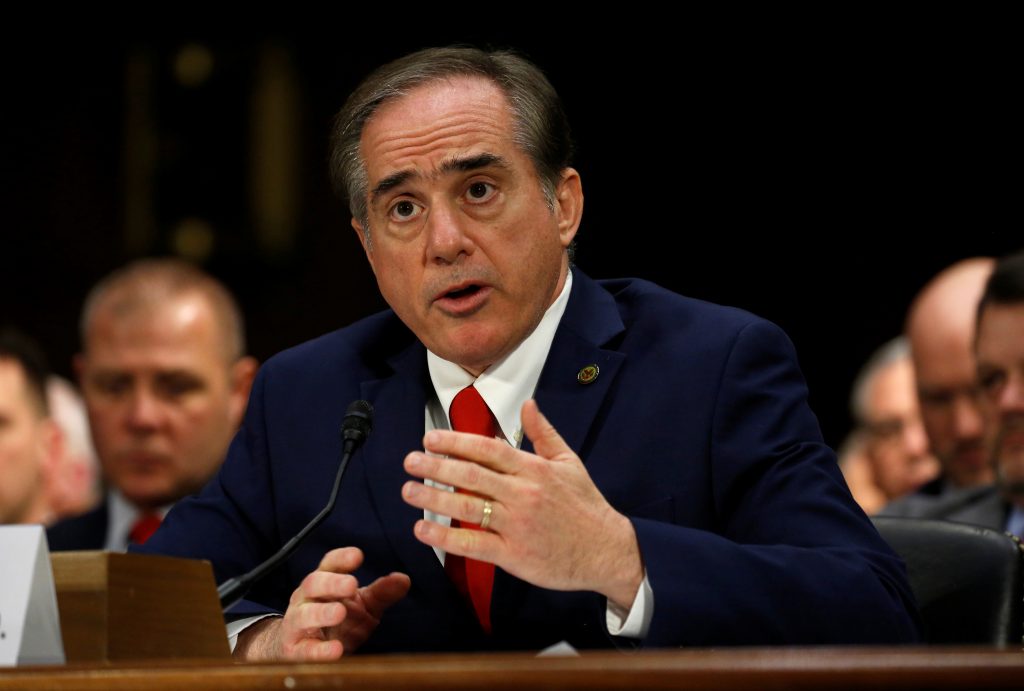
WASHINGTON (AP) -- Veterans Affairs Secretary David Shulkin urged Congress on Tuesday to act quickly to temporarily extend a troubled program aimed at widening veterans' access to private-sector health care, pointing to the growing demand for medical treatment outside the Department of Veterans Affairs.
Shulkin testified on the level of private-sector care the federal government pays for, a politically charged issue that opponents say could lead to greater privatization.
Shulkin acknowledged that the choice program put in place in 2014 following a wait-time-for-care scandal was hastily done, leading to problems of its own in providing timely care. But Shulkin said improvements to the program have resulted in more than 1 million out of 9 million veterans in the VA system now using some choice care, with data pointing to even greater use this year.
The physician, who previously served as VA's top health official in the Obama administration, said Congress must hurry to extend the choice plan beyond its Aug. 7 expiration date, or the VA will lose nearly $1 billion leftover in that account. That money can provide stop-gap care until a broader revamp is designed, he said.
"There is no time to waste," Shulkin told the House Veterans Affairs Committee. "Many veterans are using the choice program today, and it is important to continue to care for and support those veterans."
Sen. John McCain, R-Ariz., introduced legislation Tuesday with Sens. Johnny Isakson, R-Ga., and Jon Tester, D-Mont., the leaders of the Senate Veterans Affairs Committee, that would extend the choice program until its money runs out, likely in early 2018. The bill would also call for fixes in the program to help speed up VA payments and promote greater sharing of medical records.
"Have no doubt: If we let this program lapse, more than a million veterans will lose their ability to visit a community provider, the VA system will once again become overwhelmed, and veterans will go back to the pre-scandal days of unending wait-times for much-needed care," McCain said.
He said he would work with others, including Rep. Phil Roe, R-Tenn., chairman of the House panel, to help decide next steps, noting that the VA has said it could take two years to implement a broader overhaul.
Major veterans organizations and Democrats are generally not opposed to continuing the choice program as a stopgap. But they are closely watching the VA's subsequent overhaul, after President Donald Trump's transition team signaled in late December it was weighing a "public-private" option. Under that plan, veterans could get all their medical care in the private sector, with the government paying the bill. Veterans groups generally oppose that as a threat to the viability of VA medical centers.
After Trump selected him to be VA secretary, Shulkin said he would not privatize the VA. He expressed support for an "integrated model," without sketching the full details.
He says he wants to eliminate restrictions in which veterans may seek outside care only in cases where they had to wait more than 30 days for an appointment or drive more than 40 miles to a facility. But Shulkin also says he wants the VA to handle the scheduling and "customer service" for those outside appointments, something that McCain has indicated could be problematic.
The Government Accountability Office, Congress' auditing arm, recently reassigned a "high-risk" rating to VA's health programs, citing in particular problems with its choice program. In prepared testimony, Randall Williamson, GAO's health care director, said veterans could potentially wait up to 81 days to receive outside care due to bureaucratic problems, in contrast to a stated goal of 30 days or less.
Currently, more than 30 percent of VA appointments are made in the private-sector, up from fewer than 20 percent in 2014, as the VA's 1,700 health facilities struggle to meet growing demands for medical care.
---
BY HOPE YENASSOCIATED PRESS

The 40th Annual Ohio Civil War And WWI & II Show will be held at the Richland County Fairgrounds, Mansfield, Ohio, on Saturday and Sunday, May 6th – May 6th 2016. Show times are Saturday, 9-5 and Sunday, 9-3. Admission is $7.00 ; children under 12 are admitted free when accompanied by an adult. Parking is included in the cost of admission.
380 exhibitors, from 38 states will be participating in Ohio’s only Civil War And WWI & II Show. The show features 750 tables of military memorabilia from 1775 through 1945 for buy, sell, trade and display making this the largest quality show of its kind in the country. In addition, related items such as books, images, photographs, paper goods, Civil War prints and some women’s apparel will be available to the public and collectors.
In conjunction with the above, the 25th Annual Artillery Show will feature full-size cannons, limbers, cassion, Gatling guns and mortars. This is the only Artillery Show of this kind in the country where persons can view field guns, equipment and displays that relate to America’s wars from 1775 through 1945. As an added feature, people will have a rare opportunity to see cannon firing demonstrations: Saturday 11:30 and 2:00, Sunday 11:30 and 1:30
This years show will feature a 1776 Revolutionary War Living History Encampment by the 8th Pennsylvania Regiment who will be performing drills, musket firing, colonial period camp cooking, and also showing and explaining various period military attire and other demonstrations. A look back into history.
Another feature of the show will be a Civil War Field Hospital Scenario with simulated limb amputations and medical practices of the Civil War. Along with this, there will be a Living History Civil War Encampment depicting military life.
Other outdoor features include period music by harp/dulcimer, banjo/violins. A Sutler’s Row, featuring 40 sutlers, will have available reproduction items and apparel for both the military and civilian re-enactors.
A Living History Encampment by the Army of Ohio will have their authentic camp open to the public and will be performing military drills, firing demonstrations and marches through the grounds daily at random times.
See WWII Encampments, weapons and vehicles. Experience how the soldiers lived and survived in their camps.
The Marlboro Volunteer Traveling Museum will offer a spectacular display of our history from Revolutionary War up to current times including military vehicles. You can talk with Veterans and living historians.
There will be an outdoor church service for re-enactors, exhibitors and public on Sundayat 10:00 a.m. at the flagpole.
President Abe Lincoln will be attending the show on both Saturday and Sunday. Be sure to hear his Gettysburg Address.
A repeat feature for this year will be random music performances both days by the Camp Chase Fife and Drum and the Civil War Band – A crowd pleaser!
A unique showing will be a full size Civil War Supply Wagon, completed by Battery D, 1st Ohio Light Artillery, Ashland, Ohio. This is the only known reproduction. Only one original has survived the thousands used from the Civil War, and is on display at Fort Sill, Oklahoma. This wagon can be considered the “Semi Trailer” of the 1860’s.
Visit our show website for more information www.ohiocivilwarshow.com

WASHINGTON (AP) -- The Defense Department is investigating reports that some Marines shared naked photographs of female Marines, veterans and other women on a secret Facebook page, some of which were taken without their knowledge.
The photographs were shared on the Facebook page "Marines United," which had a membership of active-duty and retired male Marines, Navy corpsmen and British Royal Marines. Along with identified female military members were some unidentifiable women in various stages of undress, and the posts included obscene comments about some of the women, officials said.
The Naval Criminal Investigative Service is now investigating. The photographs have been taken down, officials said.
Marine Corps commandant Gen. Robert B. Neller on Sunday refused to comment directly about the ongoing investigation. "For anyone to target one of our Marines, online or otherwise, in an inappropriate manner, is distasteful and shows an absence of respect," Neller said in a statement.
It was not immediately known how many active-duty Marines and other service members were involved or are under investigation. A Marine Corps official, speaking on condition of anonymity because he was not authorized to discuss personnel matters by name, said at least one government contractor had been removed from his job after he posted a link to the photographs.
In response to the report, Sgt. Maj. Ronald L. Green, the top enlisted man in the Marine Corps, said: "These negative behaviors are absolutely contrary to what we represent."
The investigation was first reported by the Center for Investigative Reporting. The activity was revealed by The War Horse, a nonprofit news organization run by Marine veteran Thomas Brennan.
"We are thankful that Thomas Brennan, a Marine veteran, notified the Marine Corps and NCIS about what he witnessed on the 'Marines United' page," Marine Corps spokesman Capt. Ryan E. Alvis said. "It allowed us to take immediate action to have the explicit photos taken down and to prepare to support potential victims."
The CIR report said that more than two dozen active-duty women, officers and enlisted, were identified by their rank, full name and location in the photographs on the Facebook page. Other photographs of active duty and veteran women were also posted and linked through a Google Drive link.
The social media accounts behind the sharing have been deleted by Facebook and Google at the Marine Corps' request.
An internal Marine Corps document obtained by The Associated Press says a former Marine maintained the Google Drive and that it had a following of 30,000. The NCIS investigation is "in support of two individuals affected by postings," according to the document.
A Marine proven to have posted an explicit photo of another person could potentially be charged with violations of the Uniform Code of Military Justice, the internal document asserted. A Marine who directly participates in, encourages or condones such actions could also be subjected to criminal proceedings or adverse administrative actions, according to the document.
"The Marine Corps is deeply concerned about allegations regarding the derogatory online comments and sharing of salacious photographs in a closed website," Alvis said. "This behavior destroys morale, erodes trust, and degrades the individual."
Rep. Adam Smith, D-Wash., the ranking Democrat on the House Armed Services Committee, called the online behavior "degrading, dangerous and completely unacceptable."
"The military men and women who proudly volunteer to serve their country should not have to deal with this kind of reprehensible conduct," Smith said.
BY JESSE J. HOLLANDASSOCIATED PRESS
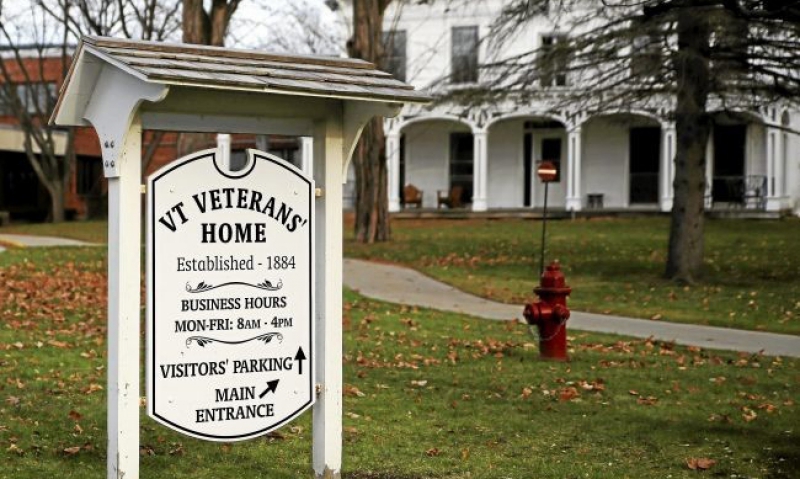
An outpouring of support from The American Legion family has helped expand a project Department of Vermont Commander John Heald set out to complete during his term.
Heald’s project was to renovate one of the overnight guest rooms at the Vermont Veterans Home in Bennington. The room is used by the families of residents of the home who need to stay overnight for any reason. Available at no charge for visiting family members, the room can accommodate two people on a first-come, first-served basis.
The estimate to renovate the room was $14,000. During the Mid-Winter Conference held in Bennington, Legionnaires came together to assist the Commander with his project. When Heald called for all donations, nine posts donated a total of $14,750, bringing the total donations for the year to $18,592.
The additional donations will be used to help create a second guest room. In the department’s February bulletin, Heald called the response “overwhelming.”
“I must say that I am astounded by the generosity of The American Legion Family and others. … I can’t thank you enough.”
Department Chaplain Kenneth Coonradt added, “This is a commendable project because many families who come long distances to visit their loved one can't afford a motel.”
Established in 1884 as the Soldiers’ Home of Vermont, the Vermont Veterans Home has grown to over 100,000 square feet of living space, giving residents room to move around and enjoy activities all day. The property also includes a deer park, a trout pond that is used for fishing derbys every year, many walkways and a gazebo. The Vermont Veterans' Home provides best of class health-care services to veterans, their spouses and Gold Star parents, while honoring their choices and respecting their rights of self-determination.
RALEIGH, N.C. (AP) --
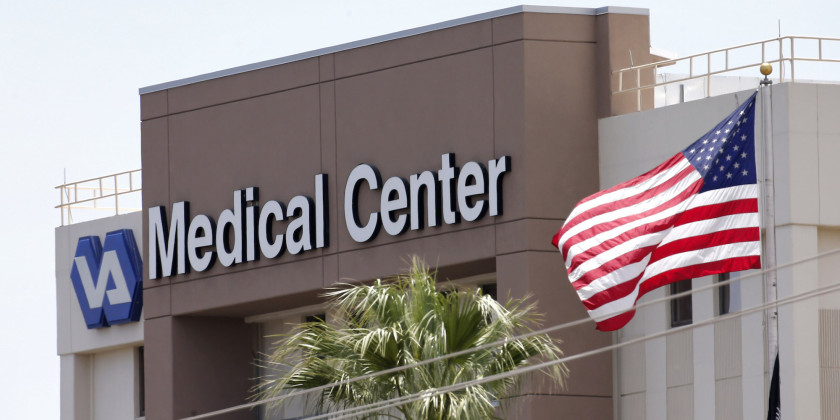
Actual delays in delivering medical care to military veterans remain far worse at Veterans Affairs facilities in North Carolina and Virginia than internal records showed, according to a new report by government inspectors.
The report released this week by the Veterans Affairs Department's inspector general showed that 90 percent of the vets eligible to see private doctors because of long VA delays weren't getting the help they were due.
Inspectors estimated that more than one-third of new patient appointments had wait times of longer than 30 days. In comparison, VA records showed only about 10 percent of those appointments had delays that long.
In three out of four of the estimated 20,600 medical appointments with wait times greater than 30 days, VA staff entered incorrect information "that made it appear as though the wait time was 30 days or less," the report said.
"It is absolutely unacceptable that the scheduling system does not provide accurate information about wait times," U.S. Sen. Richard Burr, R-North Carolina, said in a statement Friday. New VA Secretary David Shulkin should "use the power that Congress has given him to hold employees accountable and get the results that our veterans demand."
Shulkin, a physician who previously served as VA's top health official under the Obama administration, responded on behalf of the agency that inspectors came to conclusions using yardsticks that are different from VA policies.
While promising improvements by July, Shulkin said VA appointment schedulers appropriately recorded set dates for treatment that vets said they wanted.
Inspectors "ignored the dates patients told us they wanted to be seen, and selected an earlier date to use for calculating wait times," Shulkin wrote. Veterans Health Administration "believes it is very important to respect Veterans preferences for when they want to be seen. We want patients to be seen today if they want care today, and to be seen next week if they want care next week."
In previous years, when VA assigned medical appointments without asking first, the visits would frequently be canceled or skipped because patients had other plans, Shulkin wrote.
Inspectors said their 10-month investigation ending in January involved VA medical facilities in Asheville, Charlotte, Durham, Fayetteville, Greenville, Kernersville, Salisbury and Wilmington in North Carolina. The 10 months ending in January also included Virginia VA facilities in Hampton, Richmond and Salem.
VA wait times erupted into a national scandal in 2014 as veterans languished without timely care. VA inspectors said that since August 2015, they have found problems at medical facilities in Colorado Springs, Oklahoma City, Phoenix, St. Louis, and Tampa with the reliability of wait-time records, scheduling practices and access to private doctors.
---
BY EMERY P. DALESIOASSOCIATED PRESS
KANSAS CITY, Mo. –
The Veterans of Foreign Wars of the U.S. and its Auxiliary proudly announced the national winners of its annual Voice of Democracy and Patriot’s Pen youth scholarship competitions, live during last night’s 2017 VFW Legislative Conference in Washington, D.C.
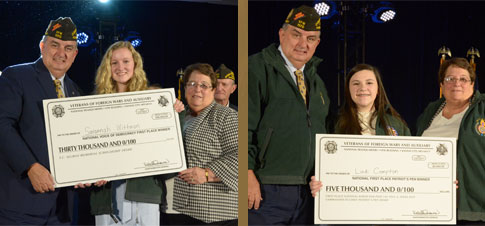
Photo Caption: (Left) VFW National Commander Brian Duffy and VFW Auxiliary President Colette Bishop present Savannah Wittman with her $30,000 award; (right) VFW National Commander Brian Duffy and VFW Auxiliary President Colette Bishop present Lindi Compton with her $5,000 award.
Enacted in 1947, the 2016-17 Voice of Democracy program’s theme asked students to describe “My Responsibility to America.” The first-place winner, Savannah Wittman, sponsored by VFW Post 12118 and its Auxiliary in Copperopolis, Calif., received an all-expense-paid trip to Washington, D.C., where she was presented with the T.C. Selman Memorial Scholarship award in the amount of $30,000.
Read Savannah’s award-winning essay, or watch her deliver her essay on-demand. See the complete list of 2017 winners.
Second-place Voice of Democracy winner Colton Ramsey, sponsored by VFW Post 10076 in Mount Airy, Md., received the $16,000 Charles Kuralt Memorial Scholarship award. The third-place winner, Katherine Fastabend, sponsored by VFW Post 63 and its Auxiliary in Boise, Idaho, received the $10,000 VFW Scholarship award. All other state winners received at least a $1,000 college scholarship. More than 38,000 students participate in the competition each year.
Enacted in 1995, the Patriot's Pen program is designed to foster patriotism by allowing students the opportunity to express their opinions on a patriotic theme, this year’s being, “The America I Believe In.” First-place winner Lindi Compton, sponsored by VFW Post 5813 and its Auxiliary in Greensburg, Ky., received an all-expense-paid trip to Washington, D.C., where she accepted a $5,000 award.
Read Lindi’s award-winning essay, or watch her deliver her essay on-demand. See the complete list of 2017 winners.
The second-place winner, Madilyn Gawrych-Turner, sponsored by VFW Post 3455 and its Auxiliary in Anna, Ill., received a $4,000 award. Third-place winner Lauren Stemple, sponsored by VFW Post 7824 in Vancouver, Wash., received a $3,500 award. Nearly 130,000 students participate in the competition annually.
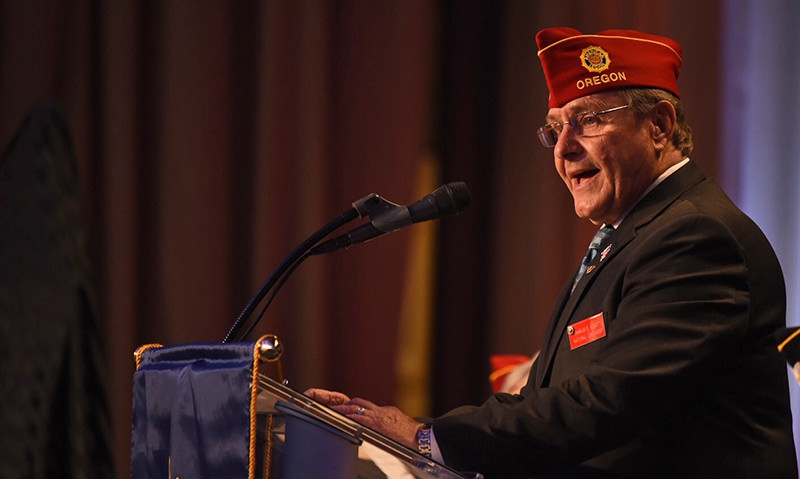
In his opening remarks at The American Legion's 57th annual Washington Conference, American Legion National Commander Charles E. Schmidt took on the deniers.
“These are people – some in the media, some in Congress, and some protesting on college campuses and in our streets – who deny that our flag has any special significance,” Schmidt said during Tuesday morning’s Commander’s Call. “It’s just a piece of cloth, they say. It’s a piece of cloth all right! It’s also the fabric of our nation."
Schmidt said that the deniers are keeping Congress from holding hearings, voting on the amendment and allowing state legislatures to enshrine the Flag Protection Amendment into the Constitution. “These people deny that flag desecration is a problem. It hardly ever occurs they say. Yet a quick Google search will reveal thousands of images of people doing just that.”
Schmidt vowed that the Legion would continue its fight to protect Old Glory. “These deniers say Congress has more important issues to address and that the Flag Protection Amendment issue is a waste of time. I say, pass the amendment and we won’t bother you with it again. Otherwise, you will keep hearing from us.”
The Flag Protection Amendment certainly wasn’t the only item on The American Legion’s legislative agenda, as Schmidt explained the organization’s position on veteran’s choice regarding health care and the Legion’s strong support for a fully-functioning Department of Veterans Affairs.
“We are not against the concept of health care choices for veterans. Realistically, not all veterans would find it convenient to use VA. Veterans in my hometown of Hines, Oregon, for instance, must travel more than 200 miles to find the nearest VA hospital. Although there needs to be a well-managed partnership with private providers to serve veterans in remote areas, we are against the current mess that is called the Choice Program,” he said. “Delays, non-reimbursement for services, and bureaucratic entanglements are constant experiences for many who attempted to use this program.”
Schmidt, who introduced VA Secretary David Shulkin to the more than 1,000 Legion Family members at the Commander’s Call, praised the direction that VA seems to be headed. “We see a lot of positive signs coming from Washington. The new VA Secretary Dr. David Shulkin seems committed to making VA better than ever before. This isn’t to say that there aren’t some serious problems to address. But he does agree that it is a system worth saving.”
He also renewed the call for Congress to pass legislation that would modernize the process for appealing veterans’ disability claims. “According to VA’s own 2016 numbers, nearly half a million appeals claims were waiting to be finally adjudicated. More than 80,000 claims were waiting for greater than 125 days. The American Legion finds this completely unacceptable.”
Schmidt pointed out that if left unchanged by 2027, veterans will have to wait an average of 10 years to hear a decision on their appeals. While modernization passed the House in the last Congress, it died in the Senate without a vote. Rep. Dina Titus, D-Nev., introduced H.R. 457 in the current Congress. The bill, Schmidt said, would simplify and speed up the process and add transparency.
While supporting a strong VA, Schmidt paraphrased President Trump. “We think the VA is already pretty good, but as the president would say, 'Let’s make it great again!'"
As he presented a Distinguished Public Service Award to Sen. John McCain, R-Ariz., Schmidt recalled a visit he made to Vietnam last November. “I visited the former home of this United States senator. I hope you don’t consider me rude for saying that it was dank and depressing. It was the infamous Hoa Lo Prison, also known as the Hanoi Hilton. And it is not a nice hotel like this.”
An area where McCain, who is the chairman of the Senate Armed Services Committee, and The American Legion have a shared interest is the need for a strong national defense. “The American Legion welcomes President Trump’s promise to rebuild our military. More than half of all Marine Corps aircraft were unflyable this past December. Only three of the U.S. Army’s 58 total brigade combat teams are considered ready for combat. The Air Force, the branch where I made a career, has a total of about 5,500 aircraft. The average aircraft age is 27 – older than many of the pilots that are flying them,” Schmidt said, pointing out that the Air Force had 8,600 aircraft in the early 1990s, calling it “a much larger force in a much safer world.” He called for Congress to “fully fund “the Department of Defense rather than operate on unsustainable continuing resolutions.
He also cited terrorist attacks in France, Germany, Belgium and Turkey, and called on the judiciary to empower the president to control who is allowed into the country. “The courts need to recognize that it is the president who has the ultimate and constitutionally-mandated responsibility to keep us safe. The bottom line is that we need to take a very hard look at our immigration and entry policies.”
Following Schmidt’s remarks, hundreds of Legionnaires visited their congressional delegations to encourage them to pass legislation called for in The American Legion’s national resolutions.
By John Raughter
WASHINGTON (AP) --
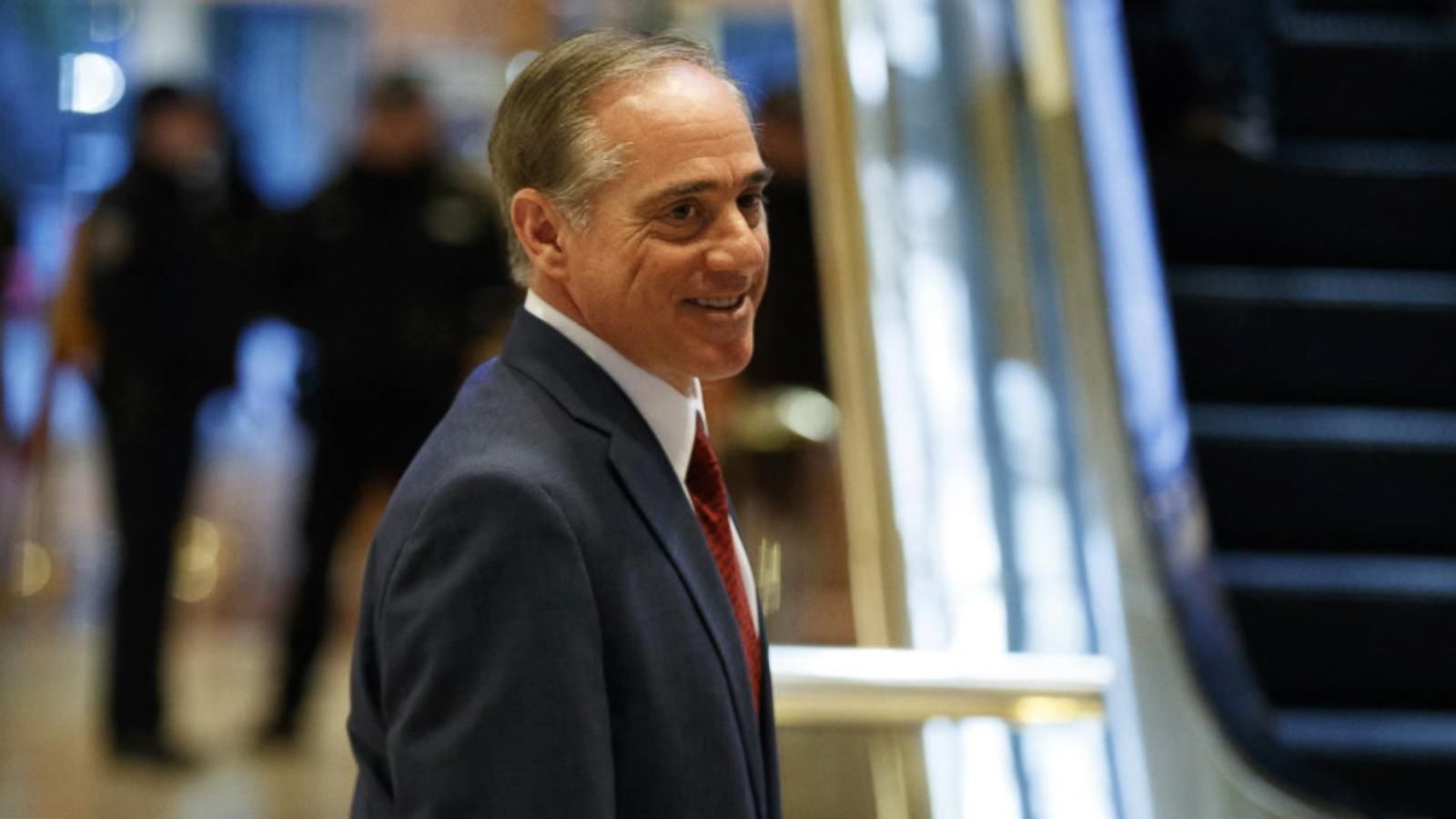
Veterans Affairs Secretary David Shulkin said Tuesday he expects a spending boost in President Donald Trump's budget for veterans programs, escaping big-time proposed cuts slated for other domestic programs.
Speaking at an American Legion conference, Shulkin also indicated to reporters that he would seek "hundreds" more exemptions to a federal hiring freeze for the Department of Veterans Affairs.
"There will be an increase in resources," he said, citing rising demand for VA services and a need to move quickly on a major overhaul of the department's health services to reduce long wait times.
"I'm confident this budget is going to reflect the president's commitment to deliver on his promise to make veterans' care better and stronger and to transform the VA," Shulkin said.
The 57-year-old physician, who previously served as VA's top health official under the Obama administration, addressed America's largest veterans' organization as it and other groups prepared to outline their spending wish-lists to Congress. Trump's preliminary budget blueprint seeks a surge in mostly military spending while slashing domestic programs and foreign aid as a whole by about 10 percent.
Major changes are already in the works, Shulkin said, including: Initiatives to combat the high rate of suicide among veterans, to be announced in the next two weeks; a House bill to increase employee accountability, which was introduced Tuesday; and a revamp this fall to a choice program aimed at allowing veterans to seek private care more easily in collaboration with the VA.
That change to the choice program, which was passed by Congress after a 2014 wait-time scandal, would ease restrictions on outside care. Currently, veterans may seek outside care only in cases where they had to wait more than 30 days for an appointment or would have to drive more than 40 miles to a facility.
"We don't need any more studies or commissions on how to fix the VA," Shulkin said, pledging to work with Congress and veterans' groups but noting that there were already more than 140 reports put together over recent years on improving the VA. "What we need to do is begin to get to work."
He said he was asking the White House to exempt hundreds more VA positions under the federal hiring freeze. The White House previously had agreed to exempt roughly 37,000 out of 45,000 VA vacancies, mostly in the health care area, but veterans' organizations and Democratic lawmakers there should be more exempted.
Shulkin said he would push for additional "small areas" of exemptions to help process disability benefits and operate veterans' cemeteries.
On employee accountability, Shulkin said he supported a bill introduced by Rep. Phil Roe, R-Tenn., who chairs the House Veterans Affairs Committee, that would allow him to fire bad employees more easily.
"There are high expectations for us to make changes to the VA and the secretary needs to have authority," Shulkin said.
---
BY HOPE YENASSOCIATED PRESS
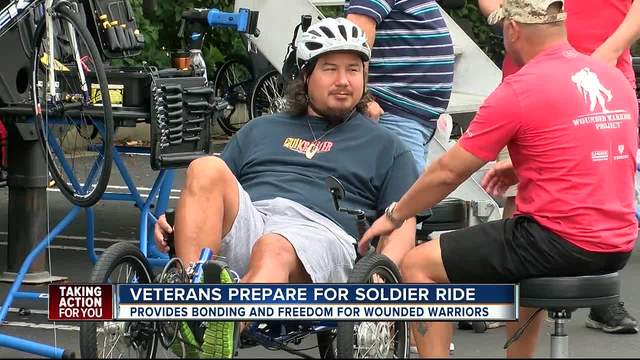
Dozens of veterans are geared up to bike 30 miles, Friday. The Wounded Warrior Project Soldier Ride happened in Tampa Bay this past weekend.
For veteran Lindsay Wiggins, this isn’t just any bike ride.
“I haven’t been able to ride a bike in a really long time,” Wiggins said. “I have balance problems so I can’t ride a normal bike and I have three children so I can’t exactly afford a recumbent.”
This will be a chance to put her PTSD, severe anxiety and physical ailments aside.
“To be able to go and do something on my own without being supervised feeling almost like a child is amazing,” Wiggins said.
She spent years serving her country, just like the other 30 veterans getting outfitted for specialty bikes Thursday.
The veterans rode 15 miles near Ballast Point Friday and 15 miles along Fort De Soto Saturday. It’s a time for Tampa Bay veterans to bond.
“That teamwork to meet other people and give support and that’s what we do,” veteran Jesus Rios said.
The program helps veterans getting back to civilian life.
“Make you feel that you’re worth the sacrifice you make,” Rios said.
By Ashley Yore