News
Newswise — Bethesda, Md. –
More than 330 uniformed professionals and their guests will receive their long-deserved medical, graduate nursing, dental and biomedical science, public health and clinical psychology degrees on May 20 – Armed Forces Day – at the Uniformed Services University of the Health Sciences (USU) 38th commencement exercise at the Daughters of the American Revolution Constitution Hall in Washington, D.C.
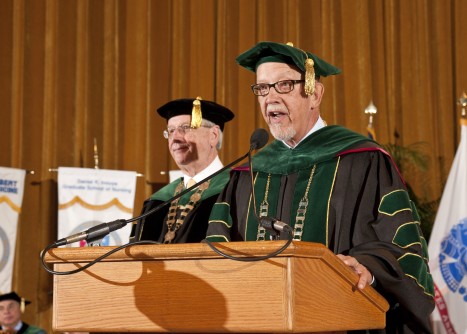
This year’s commencement speaker will be Ronald R. Blanck, D.O., chair of USU’s Board of Regents.
Dr. Blanck spent 32 years in the military, beginning in 1968 as a medical officer and battalion surgeon in Vietnam. He held a number of distinguished assignments throughout his career, chief among them as Assistant Dean for Student Affairs at USU and later, as Commander of the Walter Reed Army Medical Center and North Atlantic Regional Medical Command, and culminating as the 39th Surgeon General of the United States Army. Following his retirement, he served as the President of the University of North Texas Health Sciences Center at Fort Worth. He is now Chairman and Partner of Martin, Blanck and Associates.
During one of the nation’s most unique graduation ceremonies, USU students will enter DAR Constitution Hall to “Pomp and Circumstance” performed by “The President’s Own” U.S. Marine Corps Band. The graduates are a mix of military and civilian students. The uniformed students are active duty officers in the U.S. Army, Navy, Air Force or Public Health Service and will walk across the stage, wearing their academic regalia. They’ll receive their diplomas, leave the stage, and then change back into their military uniforms. Graduating medical students will return to recite their respective Service commissioning oath, led individually by each Surgeon General or his/her representative, and will then be promoted to their next rank.
Graduates from USU’s F. Edward Hébert School of Medicine include:
159 Doctor of Medicine degrees
34 Masters degrees
15 Doctor of Philosophy degrees
2 Doctor of Public Health degrees
The Daniel K. Inouye Graduate School of Nursing at USU will confer:
55 Doctor of Nursing Practice degrees
3 Doctor of Philosophy in Nursing Science degrees
The Postgraduate Dental College will confer:
69 Master of Science in Oral Biology Degrees
# # #
About the Uniformed Services University of the Health Sciences
The Uniformed Services University of the Health Sciences, founded by an act of Congress in 1972, is the nation’s federal health sciences university and the academic heart of the Military Health System. USU students are primarily active duty uniformed officers in the Army, Navy, Air Force and Public Health Service who receive specialized education in tropical and infectious diseases, TBI and PTSD, disaster response and humanitarian assistance, global health, and acute trauma care. A large percentage of the university’s more than 5,800 physician and nearly 1,000 advanced practice nursing alumni are supporting operations around the world, offering their leadership and expertise. USU also has graduate programs in biomedical sciences and public health committed to excellence in research, and in oral biology. The University’s research program covers a wide range of clinical and other topics important to both the military and public health. For more information about USU and its programs, visit www.usuhs.edu.

A newly released American Legion report, “The State of Credentialing of Service Members and Veterans,” sponsored by Military.com, lays out key recommendations to improve the transition to specialized civilian careers for members of the U.S. Armed Forces and military veterans.
The report, prepared by SOLID, LLC, focuses on the complex issue of converting military experience into credits toward licenses and credentials necessary for employment in multiple civilian industries that require specialized training and education. It aims to help guide the administration, Congress, state credentialing agencies and industries.
“The military invests extensively in formal training for its enlisted personnel, complemented by extensive on-the-job training and hands-on experience,” The American Legion report states in its executive summary. “Military training is state-of-the-art and, early in their careers, service members gain opportunities for direct experience that are unprecedented in the civilian sector. However, the eligibility requirements for civilian credentials seldom offer direct recognition of military training and experience as a means of qualification.”
The American Legion conducted the first systematic review of military credentialing for specialized civilian careers in 1996 and has worked continuously to improve acceptance of experience in the U.S. Armed Forces in training programs for such careers as emergency medicine, hazardous material handling, commercial truck driving, mechanical technology and other careers requiring federal, state or industry certification or licensure for employment.
The Legion has conducted numerous roundtable discussions involving industry leaders, government employers and other stakeholders over the years, including highly acclaimed national credentialing summits in 2012 and 2015. Two more roundtable discussions and another national American Legion summit are planned within the next year.
Among the areas of progress include improved military programs to document hours of training and experience for active-duty personnel that can be submitted for acceptance by government or industry licensing and credentialing agencies. Legislative efforts have also provided improvements at the federal level and on a state-by-state basis. However, the conversion from military experience to credits toward civilian licenses and credentials remains inconsistent, and GI Bill benefits do not always adequately cover the widely varying costs of final examinations.
“America spends hundreds of millions of dollars each year to train service members to do highly skilled jobs,” U.S. Sen. Elizabeth Warren, D-Mass., said at a Senate subcommittee hearing earlier this year. “They should be ready to move into civilian life with (the help of) certifications.”
She emphasized that the Senate “wants to work on making it easier for our service members when they leave the service to have that credential in hand and recognized in all 54 jurisdictions of the United States.”
Among the recommendations identified in The American Legion report are:
• Improve the Post 9/11 GI Bill Licensing and Certification Benefit to more accurately cover the cost of final certification examinations
• Ensure the quality of certification programs and non-traditional credential preparation programs
• Better track labor-market demand for employment in fields requiring licenses and credentials
• Reduce state licensure barriers for already-trained veterans and military personnel
• Develop best practices for credentialing service members and veterans
• Ensure that military and veteran interests are represented in civilian workforce credentialing initiative
Read the full report here.
AUSTIN, Texas (AP) --
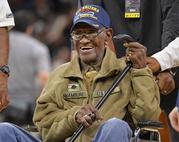
One of the nation's oldest veterans has been celebrated by his Texas hometown on his 111th birthday.
Austin Mayor Steve Adler declared Thursday Richard Overton Day in the city and also gave the street he has lived on for the past 45 years the honorary name of Richard Overton Avenue.
While Overton concedes that 111 is "pretty old," he tells KVUE-TV he still feels good. Overton mentioned that the secret to a long life is smoking cigars and drinking whiskey, two things he continues to indulge in today.
Overton was already in his 30s when he volunteered and served in the Army. He was at Pearl Harbor just after the Japanese attack.
In 2013, he was honored by President Barack Obama at a Veterans Day ceremony at Arlington National Cemetery.
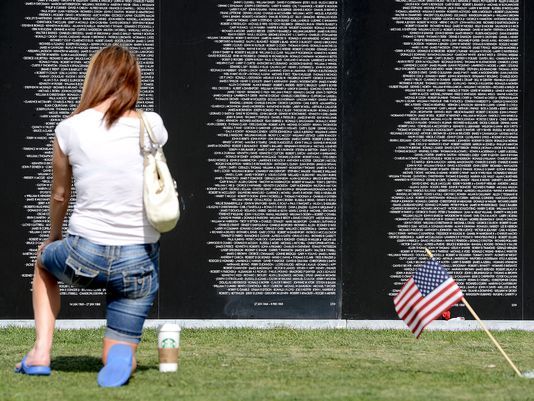
DENVER (AP) -- Two civilian initiatives are coming to Colorado to help veterans and their families deal with traumatic brain injuries, post-traumatic stress and other problems, the University of Colorado said Friday.
A five-year, $38 million gift from the Marcus Foundation will create the Marcus Institute for Brain Health at the university's Anschutz Medical Campus in the Denver suburb of Aurora, helping veterans manage the lingering effects of service-related concussions.
The foundation, based in Atlanta, was established by Bernard Marcus, co-founder of the Home Depot.
The university also announced it will work with the Cohen Veterans Network to establish a mental health clinic for Denver-area veterans and their families. The Cohen Network committed $9.8 million over three years for the clinic.
The network was started by hedge fund manager Steven A. Cohen.
Both programs are separate from the U.S. Department of Veterans Affairs, which is building a $1.7 billion medical center less than a mile from the Anschutz Medical Campus in the Denver suburb of Aurora.
A PTSD treatment center was part of the original plan for the VA hospital but it was cut from the first phase because the overall project ran far over budget.
Officials of the new civilian programs said they will complement VA services and fill some gaps. Both will offer care to veterans who ineligible for VA services because they received other-than-honorable discharges.
The Marcus Institute will treat up to 400 veterans a year using traditional and alternative medicine, said Dr. James Kelly, executive director of the institute.
"The idea would be to blend very advanced, very high-tech medical care with complementary and alternative medical methods such as acupuncture and breathing techniques and relaxation and therapeutic massage, a whole variety of things that we've found useful," he said.
Kelly, a neurologist, led the Defense Department's National Intrepid Center of Excellence at Walter Reed National Military Medical Center for seven years. The center treats active-duty servicemen and women with traumatic brain injuries and psychological health conditions.
Veterans will not be charged anything for participating, even if they do not have insurance, Kelly said.
The institute will have about 30 doctors, psychologists and physical therapists when it reaches full strength next year. It will use existing facilities at the Anschutz campus.
The Marcus Foundation hopes the institute will be a model for similar programs elsewhere.
The Cohen Military Family Clinic will be one of 25 around the nation. It will provide free or low-cost mental health care to veterans and their families and will be located about 2 ½ miles (4 kilometers) from the Anschutz campus.
It will offer treatment for post-traumatic stress, depression, anxiety, marital problems, children's behavioral health and related issues, said Anthony Hassan, president and CEO of the Cohen Veterans Network. It will focus on post-9/11 veterans but others will be considered if services are available.
Hassan said treating all veterans regardless of their discharge status is part of the Cohen Network's mission.
"Many men and women are being discharged for behavior problems or drug abuse problems," Hassan said. "Any veteran who served one day on active duty, regardless of discharge, is worthy of care in our clinics."
---
BY DAN ELLIOTTASSOCIATED PRESS
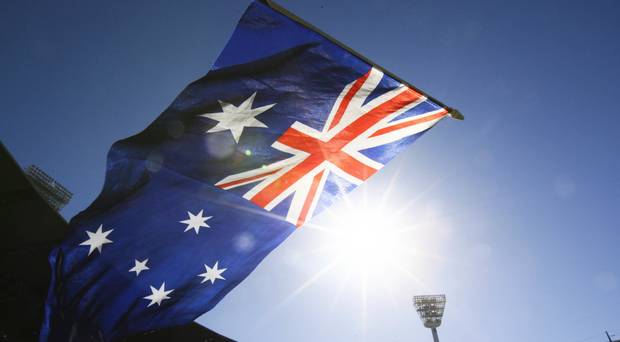
CANBERRA, Australia (AP) -- Australian ex-servicemen who were exposed to radiation during British atomic bomb tests in Australia and during the cleanup of Japan after World War II have won a decades-old campaign for free medical treatment.
The Australian government announced on Tuesday it has allocated 133 million Australian dollars ($98 million) in the budget for the next fiscal year to provide these former troops with veterans' gold cards. The cards entitle certain veterans to an extensive range of free health care at the government's expense.
Thousands of Australian servicemen were sent to Hiroshima after the nuclear blast as part of the British Commonwealth Occupation Force and to British nuclear test sites in the Maralinga region of the Australian Outback and the Montebello islands off the northwest coast from the 1940s to the 1960s.
Outback Aborigines and farmers affected by fallout in the arid and sparsely populated Maralinga region will also be eligible for free medical help, officials said.
Frank Walker, author of a history of the British tests called "Maralinga," said the gold cards for a dwindling number of survivors were too little, too late.
"It's long overdue and it's totally inadequate," Walker told Australian Broadcasting Corp., adding that the servicemen's children were also affected.
The U.S., British and French governments offered compensation to victims of their own nuclear testing, but the Australian government had long denied liability, Walker said.
"Statistically, so many higher rates of cancers and health problems have come from families of nuclear veterans than any other group in society and we've done nothing for them and it's an absolute disgrace," Walker said.
Many servicemen reported wearing only shorts and short-sleeved shirts for protection when bombs were detonated.
---------
By ROD McGUIRK Associated Press
FORT DIX, N.J. (AP) --
A young comic book aficionado is sharing his passion with the military.
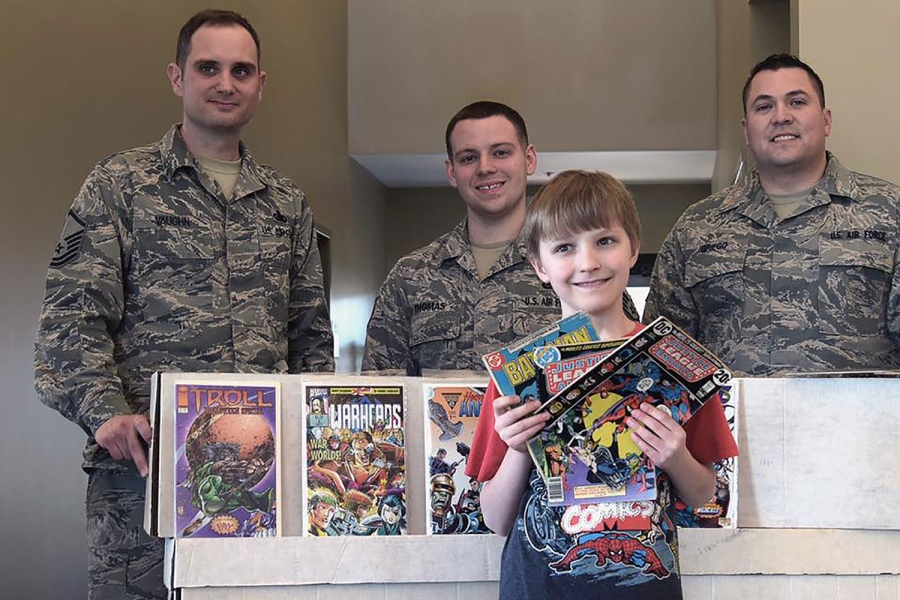
Ten-year-old Carl Scheckel organized a campaign that gathered roughly 3,000 comic books that he donated last month to Joint Base McGuire-Dix-Lakehurst in New Jersey. He collected them mostly through donations at comic book shows but also gave up many titles from his vast collection.
The comics were shipped around the globe. Recipients are being urged to send pictures back to the Montclair boy to help recognize his hard work.
"These comic books are a piece of home for our warfighters downrange," Master Sgt. Dominick Griego said. "It's an amazing thing that Carl has done."
Carl has a website dedicated to comic book reviews and interviews and says he just wanted to do something for the troops. He said the donation campaign started when one of his subscribers asked him what he thought about donating comic books to veterans in hospitals and soldiers overseas.
Carl soon ran with the idea - "because I want people to enjoy comics like I do" - and started it with about 300 of his own comics. He then made arrangements through the Department of Veterans Affairs to deliver the comic books.
"I wanted to give (military personnel) something to remind them of home," Carl said. "It's really sad when you have to go away and miss your friends and family a lot. I wanted to give them something they would enjoy."
In response to Carl's efforts, he was surprised with a VIP tour at the joint base led by several high-ranking base officials.
In a post on his website, he described it as "the best day of my life!"
Carl noted that he and his father were able to see and sit in some military planes. They also visited several sites on the base and even got to try on some military gear.
Carl said he became a comic book fan while in pre-school. He heard some friends there talking about superheroes and became intrigued when they told him about Spiderman. When he got home that day, he told his father about what he learned and soon was reading comic after comic.
When asked whether he could see himself working in the comic book industry when he grows up, Carl said he would like to create a television show about a superhero in the 1930s.
Newswise — SAN DIEGO, Calif. –
Lieutenant General (Retired) Eric B. Schoomaker, MD, PhD will be the 2017 AMSSM Presidential Keynote Speaker, lecturing on the topic of chronic pain and addiction at the 26th Annual Meeting of the American Medical Society for Sports Medicine this week in San Diego, Calif.
Prior to his retirement after 32 years of active service, Dr. Schoomaker served as the 42nd U.S. Army Surgeon General & Commanding General of the U.S. Army Medical Command. His speech is titled “Chronic Pain and Addiction — What the DOD and the VA Are Doing to Step Up to the Challenge” and will address aspects of military medicine on Tuesday, May 9.
“This topic is a vitally important in today’s society, and Dr. Schoomaker has long been a champion for combating the opioid epidemic,” said AMSSM Past President Dr. Francis O’Connor, MD, MPH.
Dr. Schoomaker committed his career to meeting the health needs of soldiers, their families and veterans throughout the U.S., Europe and the Pacific, focusing on soldier medical readiness, enhancing battlefield care, establishing comprehensive behavioral healthcare, fostering a culture of trust, advancing comprehensive pain management and promoting health by preventing combat wounds, injury and illness.
His principal interests are in both Complementary and Integrative Health & Medicine (CIHM) in the shift from a disease management-focused healthcare system to one more centered on the improvement and sustainment of health and well-being leading to optimal human performance.
“The truth is that all people will have pain at some point in their lives,” said AMSSM member Anthony Beutler, MD. “Our job as physicians is to discover and treat the cause of the pain if it is in our realm to treat. And if it's not, to help the patient explore other ways of managing and treating the cause of that pain. Dr. Schoomaker is a leading expert in alternative medicine and is leading a revolution in how we teach military medical students about their patients' pain and how to help them manage it.”
Dr. Schoomaker is a Professor and Vice-Chair for Leadership, Centers and Programs in the Department of Military and Emergency Medicine, F. Edward Hebert School of Medicine at the nation’s only Federal health university, the Uniformed Services University of the Health Sciences (USU) in Bethesda, Maryland. He promotes CIHM education and training for physicians and other health professionals, especially as they contribute to the management of acute and chronic pain. He is also exploring the central importance of leadership education and training for health professionals, so as to realize Uniformed Services University’s vision as the nation’s “health leadership academy”.
With more than 1,800 sports medicine physicians attending from throughout the United States and around the world, the Annual Meeting explores current decisions, controversies as well as best practices related to Medicine in Motion that defines the clinical practice of sports medicine.
About the AMSSM Annual Meeting: The conference features lectures and research addressing the most challenging topics in sports medicine today including overhead athlete care, military medicine, sports performance training, youth sports, professional athlete care, leg pain, mental health in athletes, current sports medicine topics and much more.
About the AMSSM: AMSSM is a multi-disciplinary organization of more than 3,300 sports medicine physicians dedicated to education, research, advocacy and the care of athletes of all ages. The majority of AMSSM members are primary care physicians with fellowship training and added qualification in sports medicine who then combine their practice of sports medicine with their primary specialty. AMSSM includes members who specialize solely in non-surgical sports medicine and serve as team physicians at the youth level, NCAA, NFL, MLB, NBA, WNBA, MLS and NHL, as well as with Olympic teams. By nature of their training and experience, sports medicine physicians are ideally suited to provide comprehensive medical care for athletes, sports teams or active individuals who are simply looking to maintain a healthy lifestyle. www.amssm.org
KANSAS CITY, Mo. –
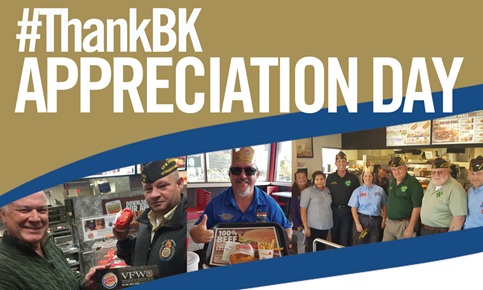
Members of the Veterans of Foreign Wars of the U.S. and its Auxiliary will be out in force on Armed Forces Day, Saturday, May 20, 2017, to show their support and appreciation for BURGER KING® franchisees as part of #ThankBK Appreciation Day.
Since 2007, BURGER KING® franchisees and their customers have contributed over $4.3 million to the VFW Unmet Needs program. This program provides grants of up to $5,000 to qualified applicants who’ve fallen on hard times as a result of deployment, injury, or other military-related activities. To date, BURGER KING®’s generosity has directly assisted more than 4,100 veterans and military families.
The VFW is encouraging its members, their families and friends to stop in, purchase a meal and say “thank you” to the franchise owners, managers and BURGER KING® team members for their continued support of the veteran community. It’s also asking all members to post to social media about their visit using #ThankBK.
It’s through the efforts of supporters like BURGER KING® that the VFW is able to provide service members, veterans and their families a hand up when they need it most.
Find a BURGER KING® location near you, or learn more about the Unmet Needs program.
Newswise — Bethesda, Md. —
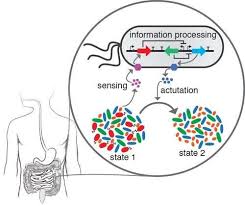
A new study finds that long periods of physiological stress can change the composition of microorganisms residing in the intestines (intestinal microbiota), which could increase health risks in endurance athletes and military personnel. The study, published ahead of print in the American Journal of Physiology—Gastrointestinal and Liver Physiology, is the first to study the response of the intestinal microbiota during military training. The manuscript was chosen as an APSselect article for May.
Healthy intestines are semi-permeable and act as a defense both to let nutrients into the bloodstream and keep bacteria and other potentially harmful substances out. Physical stress can increase intestinal permeability (IP), which allows more materials out of the intestines and raises the risk of inflammation, illness and symptoms such as diarrhea.
A group of 73 Norwegian Army soldiers participated in a military-style cross country skiing training exercise. Over four days, the group skied approximately 31 miles (51 km) while carrying 99-pound (45 kg) packs. The researchers collected blood and stool samples before and after the training exercise. The soldiers took 24-hour urine tests before the exercise and on the third day of the trek, before which they drank a solution of water mixed with the artificial sweetener sucralose and mannitol, a sugar alcohol. The human body does not break down sucralose during digestion, but gets rid of the sweetener through urination. Levels of excreted sucralose are commonly used as a marker for IP.
The microbiota and the composition of substances produced during metabolism (metabolites) in the soldiers' blood and stool changed significantly by the end of the aggressive training period. Sucralose excretion rose considerably, indicating an increase in IP. Concentrations of several compounds that are products of bacterial metabolism of amino acids and fat decreased in the stool, and levels of more than half of the different compounds found in the volunteers’ blood changed during the military training session. Changes in IP were associated with changes in inflammation, the composition of the intestinal microbiota before training and changes in several metabolites possibly derived from the microbiota. “[Previous] human studies have demonstrated that drastic changes in diet impact intestinal microbiota composition by altering the availability of metabolic substrates for intestinal microbes. Our findings contrast with those reports in demonstrating alterations in microbiota composition that most likely were not solely attributable to diet, and which were more pronounced than is commonly reported in human diet studies,” the researchers wrote.
Intestinal microbiota appear to be one influencing factor in the gut’s response to physical stress. “Our findings suggest that the intestinal microbiota may be one mediator of IP responses to severe physiologic stress, and that targeting the microbiota before stress exposure may be one strategy for maintaining IP,” the researchers wrote.
The article, “Changes in intestinal microbiota composition and metabolism coincide with increased intestinal permeability in young adults under prolonged physiologic stress,” is published ahead of print in the American Journal of Physiology—Gastrointestinal and Liver Physiology. It is highlighted as one of this month’s “best of the best” as part of the American Physiological Society’s APSselect program. Read all of this month’s selected research articles on the APSselect website.
NOTE TO JOURNALISTS: To schedule an interview with a member of the research team, please contact the APS Communications Office or 301-634-7209. Find more research highlights in the APS Press Room.
Physiology is the study of how molecules, cells, tissues and organs function in health and disease. Established in 1887, the American Physiological Society (APS) was the first U.S. society in the biomedical sciences field. The Society represents more than 10,500 members and publishes 15 peer-reviewed journals with a worldwide readership.
Newswise — MANHATTAN, Kan. —
Military spouses may not wear uniforms or enter combat, but they deserve appreciation for their sacrifices, according to a Kansas State University expert on military families.Briana Nelson Goff, professor of family studies and human services and director of the Institute for the Health and Security of Military Families in the College of Human Ecology, said most military spouses experience a lifestyle of constant adjustment."It's important to realize that the military service member may be deployed, but everyone in the family is serving," Goff said. "The spouse and kids may not be deployed, but they are serving their country as well, so we need to honor that."After finding out their partner is deploying, Goff said military spouses can go through several phases:• The preparation phase, when they learn more about where their spouse is going and for how long.• The deployment, which may include months of single parenting.• Their spouse's return, which may not include much notice.• Leave after deployment, which may include family vacations or just time together at home.• Their spouse returning to his or her regular work schedule, when the family attempts to return to normal or find a "new normal," Goff said.For some spouses, the start of a deployment is the most stressful portion of the cycle, especially when they have short notice about it. Others find the preparation phase more intense than the deployment itself."Each family is a little different, but it's not easy for anyone," Goff said.Along with time-related adjustments in the phases of military life, spouses experience geographical adjustments, with many military families moving every two to three years."They may come to one place that has a really good network with a supportive community, and then move to another place that doesn't have those features," Goff said. "It's understandable to expect the next place to be the same, and when it isn't, the transition can be difficult."In addition to the rollercoaster of emotions many spouses face through their various adjustments, some spouses must adapt to their partner coming home with post-traumatic stress disorder, which affects the entire family. Many people assume if a military member has PTSD, the disorder will show up immediately upon return, but Goff said PTSD can sometimes be triggered by other changes, such as a transition out of the military or a cross-country move."It's hard to predict who will experience PTSD, why they might get it and when it might hit," Goff said. "Regardless, it's often difficult for spouses to understand."Goff said about 15-20 percent of military spouses are diagnosed with general anxiety disorder or major depression. People can help military spouses relieve stress and find joy in many ways, such as offering to babysit while their partner is deployed; inviting them over for dinner or taking dinner to their family; becoming their workout buddy; and sitting down for coffee to listen to their stories."The more we can help bring a sense of consistency and support to military spouses, the more they can provide stability and a sense of normalcy for the whole family," Goff said. "It's difficult because everyone is busy, but when we spend a bit of time to support a military spouse, we can help their family thrive."Friday, May 12, is Military Appreciation Day in the U.S. The event is observed each year on the Friday before Mother's Day.