News
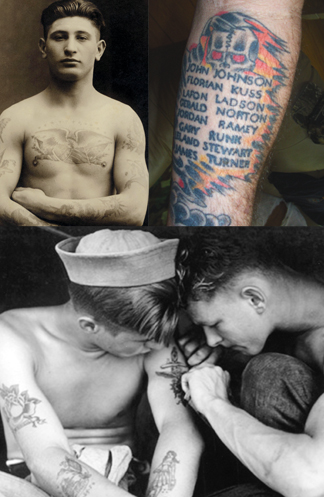
While anthropologists cannot pinpoint one reason tattooing began or held fast over the course of humanity, one reason tattooing persists is to signify a warrior. The tradition of tattooing is a mainstay in American military history, from the Revolution to today. The age-old practice of tattooing can be found on mummies dating as far back as 4000 B.C. Cultural anthropologists attribute the spread of tattooing or body-marking culture to a variety of human traits, ranging from religion to magic to experience and memory. Outside of religious or ancient ceremonial trends—especially among tribal people worldwide—the connection of the body with patriotic sentiments has, for centuries, been a motivating factor in perpetuating the art of tattoo among warriors. Furthermore, some anthropologists argue that early tattooing was a form of therapy. “Tattoos and other permanent forms of body modification have been paramount in establishing the status and reputation of warriors for hundreds, if not thousands, of years,” Lars Krutak, a tattoo anthropologist and the host of Discovery Channel’s Tattoo Hunter, told Medium’s “War is Boring” blog in 2014. Romans & Tribal MarkingsIn Western culture, tattoos find roots in the Roman Empire. Roman soldiers were tattooed with permanent dots—the mark of SPQR, or Senatus Populusque Romanus—and used as a means of identification and membership in a certain unit. The Greek word Stizein meant tattoo, and it evolved into the Latin word Stigma meaning a mark or brand. Typically, tattooing was associated with lower classes (criminals, slaves and gladiators) as well as Thracian (Southeastern Indo-European tribe) infantry. Additionally, tribal warriors of the British Isles embraced the practice of tattooing. Picti people of Caledonia (now Scotland) were known as “the Painted People” because of their tattoos. Celts were known to paint their bodies with spiral motifs—recognized as Celtic knots today. Some American tribes affiliate certain “paint”—body paint, rather than puncture tattooing—with success in war. Maori tribes of New Zealand have specific tattoo patterns and placement—known as moko—that tell of the wearer’s ancestry and social standing. Maori warriors would behead slaves and tattoo the heads in order to barter for weapons and ammunition from visiting Europeans during the 1700s. “Use of paint during warfare is very common throughout North America and Australia,” wrote Wilfrid Dyson Hambly in his 1925 book The History of Tattooing. “The desire to impress one’s foes may be uppermost in the case of an advancing army of Indians or Australians who have used the red war paint very freely.” Throughout Gallipoli (Turkey), Malta and France, soldiers and sailors sported markings. But the sweep of Christianity stifled tattooing in much of the Western world when, in 787 A.D., Pope Hadrian I outlawed tattooing. Resurgence in Western CultureIn the 18th century, at the height of British colonial exploration, Capt. James Cook’s expeditions to the Far East resulted in a renewed fascination with the age-old practice of body marking. Sailors returned with permanent reminders of their travels and marks of seaward superstition. The use of tattoos as identification continued, spreading to sailors in America. During the American Revolution, sailors’ American citizenship papers were often disregarded by British Navy ships—destroyed in some cases—so seamen tattooed their identification information as a way to avoid being illegally recruited by the British navy. The 19th century British army commander Frederick Roberts encouraged tattoos on troops, saying: “Every officer in the British army should be tattooed with his regimental crest. Not only does this encourage esprit de corps but also assists in the identification of casualties.” (Among many campaigns, Roberts served in Afghanistan during the Second Anglo-Afghan War in 1878.) Two prominent tattoo artists of the 19th century—Tom Riley and Sutherland Macdonald—both served in the British armed forces. Riley fought with the army in the Second Boer War in South Africa from 1899-1902, as well as Sudan, and Macdonald also served in the British army in the 1880s. Around the same time, British sailor George Burchett learned the art of tattooing. He joined the navy at 12 years old and, after his service and some years travelling the world, Burchett opened a tattoo parlor in England, and trained under Riley and McDonald. He eventually became known as the King of Tattooists—allegedly tattooing members of the upper class as well as royalty. Migration to the U.S.German immigrant Martin Hildebrandt is believed to have opened the first tattoo shop in New York City in 1846. He travelled the country tattooing Civil War soldiers. Civil War veteran Wilbur F. Hinman wrote in his novel Corporal Si Klegg and His Pard: “Every regiment had its tattooers, with outfits of needles and India-ink, who for a consideration decorated the limbs and bodies of their comrades with flags, muskets, cannons, sabers and an infinite variety of patriotic emblems and warlike and grotesque devices.” Hinman served with the Ohio 65th Volunteer Infantry. This trend of tattooing military servicemembers persisted. It’s said that even Smedley Butler sported a tattoo of the Marine Corps emblem. “Interesting cases of present-day employment of tattooing to express social solidarity are common enough among soldiers,” Hambly wrote. “Military men not infrequently mark themselves with something which shows allegiance to their profession, for example, the date of a battle, cross-guns, a flag, a cannon, or a pyramid of bullets. Naval men prefer a ship or an anchor, and sometimes the marking does not merely connect the wearer with some particular army, but further identifies him with a certain corps. Thus a cavalryman tattooed a horse on himself.” Hambly claims in his book that at the time of publication (1925) some 90% of U.S. Navy sailors were tattooed. The popularity of tattooing in port towns throughout the U.S. stirred the tattoo business. In 1918, August Coleman—“Cap” as he was known among his clients—opened a tattoo parlor in Norfolk, Va., making a living by tattooing sailors. Franklin Paul Rogers, who became known for his development of modern tattooing machinery, studied under Coleman from 1945-50. As a child, Rogers met a Spanish-American War veteran who was heavily tattooed, and the future father of American tattooing got his first tattoo at 21 in 1926. He is best known for his “old-school” tattooing style, modeled by such current tattoo artists as Ed Hardy. Norman Keith Collins—known best as “Sailor Jerry”—was highly influential in the American tattooing world. He served in the Navy, joining in 1930, and traveled much of Southeast Asia. He learned about the practice, becoming influenced by the culture and tattooing style of that area. His style shaped tattoo trends throughout the U.S. in the mid-20th century and remains popular today. Superstition and TraditionAfter WWI, tattooing lost its social status, though continued to be a mainstay in the military. “Two reactions seem to be possible in persons who see a tattoo on someone,” wrote Samuel M. Steward, a prominent tattoo artist during the mid-20th century, in his book Bad Boys and Tough Tattoos: A Social History of the Tattoo with Gangs, Sailors and Street-Corner Punks, 1950-1965. “One is complete fascination, a feeling that here is the ultimate stud, the great macho…the far-traveling sailor…The other is a complete revulsion: the tattoo represents the epitome of sleaze…everything that intelligence and sophistication have conditioned you to despise.” For many, superstition and tradition played a role in motivating U.S. troops to get tattoos. Certain symbols represented the location a sailor had been— dragons for Asia, hula girls for Hawaii, a fully rigged ship for Cape Horn. Others symbolized a sailor’s job or experience —a swallow for every 5,000 miles sailed, an anchor for a boatswain or chief. Some sailors believed tattooing a pig and a rooster on the arches of each foot would prevent them from drowning. “In order to express sympathy for a shipmate, one sailor had tattooed a picture of a steamship over which were the words, ‘Empress of Ireland,’” Hambly wrote. The practice remained popular, however, throughout the Korean and Vietnam wars. “On summer weekends the sailors flocked into my shop in such numbers that it was necessary to have a policy of ‘Navy first,’ requesting the city boys to come back later, or on another day,” Steward wrote. Irving Berlin even wrote a song about it. “A Sailor’s Not a Sailor (‘Til A Sailor’s Been Tattooed)” was performed by Ethel Merman. Tattoos TodayIndeed, the topic of tattooing in the U.S. Navy (as well as all military services) has become more divisive in recent years. A 1986 issue of All Hands (the official magazine of the Navy) published an article imploring sailors to reconsider getting a tattoo. Though for the modern veteran, tattoos from during and after their military service tell a story and can be used as a form of therapy or recognition. Such projects as Service Ink (see the May 2016 issue) have emerged, encouraging veterans to tell their stories via tattoo. VFW Post 9488 supports a program called Operation Tattooing Freedom, which provides free tattoos as a means of cathartic release for veterans experiencing PTSD or chronic pain. “A month out of boot camp [in 1999], I had 11 tattoos—typical sailor tattoos,” said Lewis Hunt, former commander at Post 9488 in Charlotte, N.C. “When I’m getting tattooed, I tend to go to a neutral place. The worries of the world go away, and I can be in the moment.” Hunt himself suffered from PTSD as a result of his service in Afghanistan from 2001-02. He had been on sleep medications for five years and was having issues at home that were affecting his family. “I talked with my tattoo artist for awhile,” Hunt said. “He was also a veteran. We talked about what we’d dealt with, where we were at. When I got up from getting that tattoo, I felt so much better. My issues didn’t go away, but I was able to work through it. I realized how much that tattoo positively affected other parts of my life.” In 2009, the Army reported that some 90% of combat soldiers had at least one tattoo—a much higher percentage than the one in five people in the general population with a tattoo. Themes typically included pride in service, patriotism, unit identification and memorials. Army Regulation 670-1 has been updated frequently in the past few years—most recently no longer limiting “the size or number of tattoos soldiers can have on their arms and legs.” (Army Times, April 10, 2015.) Air Force regulations (AFI 36-2903) allow tattoos as long as they are not excessive (defined as visible in uniform on more than 25% of the exposed body part). As of April 2016, the Navy’s current regulations allowed sailors to sport one neck tattoo and full sleeves (tattoos covering the entirety of a person’s arm). “Society is changing its view of tattoos, and we have to change along with that,” former Army Chief of Staff Gen. Ray Odierno told Military Times in April 2015. “It makes sense. Soldiers have grown up in an era when tattoos are much more acceptable, and we have to change along with that.”


There’s a new way for veterans to access health care. Mobile apps—programs designed for devices such as smartphones and tablets—can help vets cope with ailments such as PTSD, TBI and general anxiety. Experts say this new frontier will require regulation and careful oversight. But the mental health field may be one area where veterans can use apps in addition to traditional health care to improve their quality of life. Today, both VA and other organizations are working to help create access to care—with the veteran in mind.According to “Meeting the Behavioral Health Needs of Veterans,” a study by the National Council for Behavioral Health, 30%, or nearly 730,000, of the 2.4 million active-duty and reserve military personnel who deployed to Iraq and Afghanistan will have a mental health condition requiring treatment. FOUR APPS IN ACTION The VA Office of Connected Health already has several apps geared toward mental health. Neil Evans, a primary care internist and acting chief of the office, said the apps are a way to add value to existing mental health treatment. This, in turn, increases the value of a patient’s health care. “These apps are all designed to be used along with existing therapy,” he said. “If you can augment the communication with their provider, and take those lessons and apply them in their daily life, that’s going to improve their experience.”The apps cover a range of mental health concerns—VA’s flagship app PTSD Coach was the first. Released in 2011, PTSD Coach is available in 95 countries and has been downloaded more than 300,000 times. But it’s not just for PTSD, said clinical psychologist Julia Hoffman, national director for mobile health at VA’s Mental Health Services. PTSD Coach was born out of the idea that patients wanted something to practice outside of therapy. So they talked with experts, clinicians and patients and developed an app to help patients tolerate stress in their everyday lives. “That is something anyone can identify with, not just people with PTSD,” Hoffman said. “Anybody with emotion dysregulation, anger, irritability [and/or] anxiety can benefit from this tool.” Developing PTSD Coach and the other apps for mental health constitute an incredible opportunity to dismiss the stigma that keeps some veterans from getting the care they need, she said. Three other apps are very similar in nature: PE Coach, ACT Coach and CPT Coach are more specific and designed to work with the type of therapy a patient is already receiving. The PE Coach app is for veterans, troops and others to use in Prolonged Exposure (PE) therapy for PTSD with a behavioral health professional, according to VA. As an aid for therapists during PE sessions, the app provides tools for patients to process their traumatic experiences and reduce anxiety and fear.“When people participate in it as prescribed, it really works,” Hoffman said. “However, it’s not without a drawback: it asks a lot of the patient and the therapist. It’s very difficult work.”One of the key features is that patients are asked to go through—in extreme detail—what their events were. The app has the capability to audio record PE therapy sessions directly onto the patient’s mobile device. This is used as homework, where the patient can listen back. And with the portability of a mobile device, the patient can now do this and other homework anywhere—and do it discretely. “Instead of carrying a big binder that says ‘PTSD’ to the whole world, [the patient] looks just like every other person who is also sitting there, looking at his phone,” Hoffman said. All of the apps are designed to create real, long-term clinical improvement so veterans can go on with the rest of their lives, Hoffman said. It is not intended to undermine or reinvent any of the highly successful interventions.PE Coach also can track symptoms over time to evaluate treatment progress and outcomes. Features like that decrease the time the patient spends in the therapy room—when that time would be better spent engaged with the behavioral health expert, Hoffman said. ACT Coach is another VA app. This one is designed for users who are in Acceptance and Commitment Therapy (ACT). Features include exercises to practice the ACT core concepts, as well as a way to log and track useful coping strategies.According to VA, CPT (Cognitive Processing Therapy) has been shown to be one of the most effective treatments for PTSD for both civilian and military-related traumas—VA also has an app for that. Like ACT Coach, CPT Coach also works in conjunction with a mental health care provider for users undergoing that particular kind of therapy. It contains support material for a complete course of CPT to help patients manage their treatment. This includes in-between session assignments, readings, PTSD symptom monitoring and mobile versions of CPT worksheets.ON THE WEB: GIVE AN HOURBarbara Van Dahlen is a clinical psychologist and president of Give an Hour, a non-profit that connects volunteers from the medical community with military personnel and their families. Medical providers offer their services for free, giving their time.Van Dahlen came up with the concept of connecting those in need with providers in 2004. She heard about vets coming home from Iraq and Afghanistan and dealing with the psychological consequences of war. She thought of Craig’s List, the online classified site connecting those seeking goods and services. So she asked herself why not take the same approach to mental health care?“We live in this virtual space to begin with,” she said, adding that there’s no overhead required for facilities—the providers use their already existing office space. Mental health care providers donate their time virtually, and users can receive care for free. Today, the group has more than 7,000 providers signed up. Veterans, family members and even non-married partners can participate for free. “There’s no money changing hands,” Van Dahlen said. But with advancements in technology comes a need to regulate this new frontier. “There are no guidelines yet,” Van Dahlen said about the apps. She added that it’s important to remember to treat this companion care in a responsible, healthy and appropriate way. “When people are vulnerable and hurting, we need to be really careful,” she said. “There’s tremendous potential here, but it’s kind of the wild, wild West.” Currently, Van Dahlen, VA and other industry leaders are working to help create guidelines.Health care apps may not be a solution for everyone, Evans said. But it is a key strategy for any health care system. “Having mobile tools for patients in general to better engage in their own health care and better understand and manage their health care is going to be a critical offering of any health care system as we move forward in the next couple of years,” he explained. BACK TO BASICSNo matter whether it’s online or on an app, technology is not a replacement for getting real-life assistance from a health care provider.“These technologies are not intended to replace proper mental health care with a trained professional,” Hoffman said. “What they are meant to do is to support ongoing care, including care that’s received from a mental health professional or primary care clinics, where many people actually seek mental health care options.”Evans said if you’re interested in how an app can help, start the conversation with your health care provider. “Health care is all about a relationship and open communication, so most providers are very open to a discussion on how to find the tools and approach to help their patient thrive,” he said. “Often times the provider is willing to try something new if the patient is excited about it and motivated to use it to improve his or her health.” Whether they are military or civilian, people should be mindful of others’ and their own mental health. “You might want to reach out, check on them, talk to them,” Van Dahlen said. “If you had a gash, you wouldn’t walk around with it oozing. There are things you can do to help that heal.”After seeking professional help, there are many additional methods, such as yoga or meditation that can aid. “Then you’re on your way to finding out what’s right for you,” Van Dahlen points out. “One size doesn’t fit all. Take advantage of the resources available to you. We all have the potential to recover.”
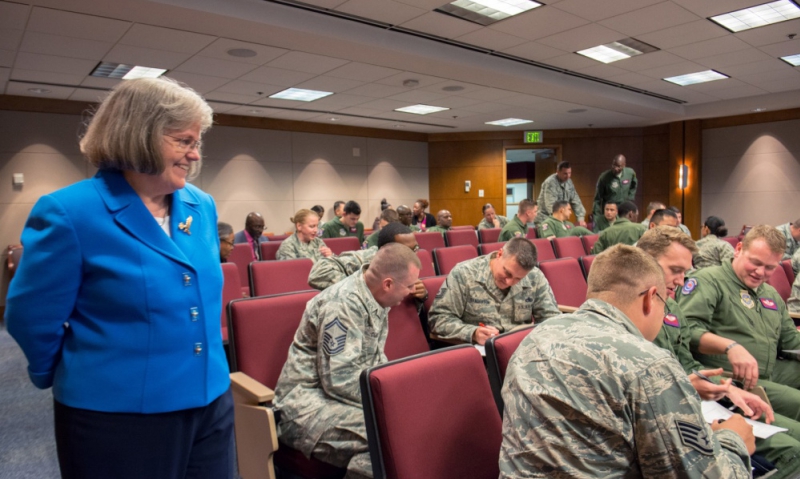
In the aftermath of the economic crash nearly a decade ago, the Consumer Financial Protection Bureau (CFPB) was created in 2011. Still, the question remained: How would consumers receive the help they needed as the U.S. economy began to recover from its most severe setback since the Great Depression?
“There were a number of good federal consumer financial laws on the books, but the enforcement of those laws was spread out among seven different federal agencies,” said Holly Petraeus, a CFPB assistant director who oversees the division responsible for helping veterans, servicemembers and their families. “The president and the Congress decided one thing they could do would be to create a new federal agency and give it the mission of protecting consumers, and migrate the enforcement of those consumer financial laws over to that new agency.”
The CFPB, which offers a collection of free programs and resources, has the backs of consumers. “We're here to make the markets work for consumers so they can see the costs and risks of products up front,” Petraeus said. “We have the power to both enforce the laws that are out there and also to write rules related to those laws.” In the five years of the CFPB’s existence, it has returned almost $12 billion to U.S. consumers, including $200 million to veterans and servicemembers.
There is a dedicated web page for veterans and servicemembers where they can access information, resource and file a complaint. Capt. John Jamison learned of the CFPB’s impact in 2012 when he was an Air Force judge advocate general at Ellsworth Air Force Base in South Dakota. As a JAG officer, he provided legal assistance to active-duty servicemembers and veterans.
Jamison recalled when an E7 (master sergeant in the Air Force) sought help. The master sergeant was being transferred to another duty station and was concerned because his family owned a home near Ellsworth and another one back at their previous duty station. They owed more on the latter house than it was worth so he wanted to do a short sale. “As a military member we have an obligation to pay our debts, so he was being a good military member and he was being a good steward of the loan in that he was continuing to pay the debt, but he wanted a short sale,” Jamison said. “Often times to get a short sale, the mortgage lender will require you to have a hardship or they will require you to be delinquent in your loan payments. And honestly, he did not want to be delinquent, because once you become delinquent it really ruins your credit score and additionally it allows them to foreclose on you.”
The master sergeant’s request for a short sale had been denied by his bank. So Jamison contacted the CFPB’s Office of Consumer Response on his behalf. “We had a correspondence where we gave them the information they needed and then about two weeks later, the bank reached out to say, ‘Your short sale’s approved,’” he said. “The CFPB had worked a kind of miracle in about two weeks, something that neither he nor I had been able to accomplish in about nine months.” Petraeus lists three main priorities for her office.
The first is to ensure that servicemembers and their families get the financial education they need to make informed consumer decisions. “When I say ‘servicemembers,’ the law says that's active duty, National Guard, and reserve, but I also include retirees and veterans in who my office serves, because I think if you've worn the uniform, my office should serve you,” she says.
The second part is to monitor and react to the complaints from servicemembers and veterans. And the third is to work with other federal and state agencies on consumer protection measures for the military. “When it comes to veterans, for example, I've done a lot with the state directors of Veterans Affairs,” Petraeus said. “We work with the nonprofits, the military and veterans service organizations like The American Legion, and also have done quite a lot with the state Attorneys General.
Each state has an AG who is their chief law enforcement person, and they do a big consumer protection role, so we work with them as well.” Outreach is also a priority for the agency. Petraeus says that her office has visited 130 military installations, as well as veterans service organizations and others. During these visits, CFPB staff learn of scams and issues affecting veterans. “One issue that was brought up to me pretty regularly was the scammers using VA benefits as a hook to get into the finances of veterans,” Petraeus said. “Offering to help with benefits claims, sometimes charging for them, which they are not, of course, supposed to do.
Often some scammers got into their finances, telling them they could qualify for benefits like aid and attendance. And if the veterans had too much money, (the scammers would do) a lot of finagling to move their money somewhere inaccessible so they could pretend that they didn't have much money in some cases. I remember reading about one annuity that was set up so the veteran wasn't able to access it until he was in his 90s.”
The CFPB also puts an emphasis on transitioning servicemembers, helping them navigate the Transition Assistance Program. “We really felt that there wasn't a warm handoff to a trusted financial coach after they left, and maybe realized that that financial plan that they created in TAP wasn't going to work in the real world for a variety of reasons,” she said. “That expected salary didn't happen, all the expenses that they had not thought about associated with living in the civilian world, turned out to be more than they thought.” Now, CFPB has certified financial coaches at 40 locations nationwide, stationed at Department of Labor American Job Centers.
“The Department of Labor was quite enthusiastic about it,” Petraeus said. “They have a gold card program for veterans where veterans go to the head of the line. They said to have a coach like this sitting in one of their job centers would just be a further enhancement for them.” The coaching program, as well as other CFPB initiatives, is free for veterans and servicemembers. But the payoffs can be substantial.
Petraeus mentioned that one of her division’s earliest successes was winning a judgment that forced a subprime auto lender to reimburse 60,000 servicemembers. “Individually, it was a small amount of money, but it sent a message,” she said. “Sometimes, if we see trends but it's not something that we enforce, we know the people who do, and we may refer to them. We got a lot of complaints about the federal student loan servicer Sallie Mae, and ultimately, we referred those to the Department of Justice, and that resulted in a settlement of $60 million to 77,000 servicemembers and veterans.”
The agency has a trail of large settlements and individual successes. “The CFPB is an incredible resource,” Jamison said. “And if servicemembers are having issues, they should absolutely reach out to see if the CFPB could help. I know actually personally, they also helped me. I had an issue with a student loan and they were able to help me get my student loan issue resolved. So, in essence, they’re just a fantastic resource for servicemembers. It’s very easy to make a complaint on their website and reach out to get help.”
By Henry Howard
MIDDLE RIVER, Md. –
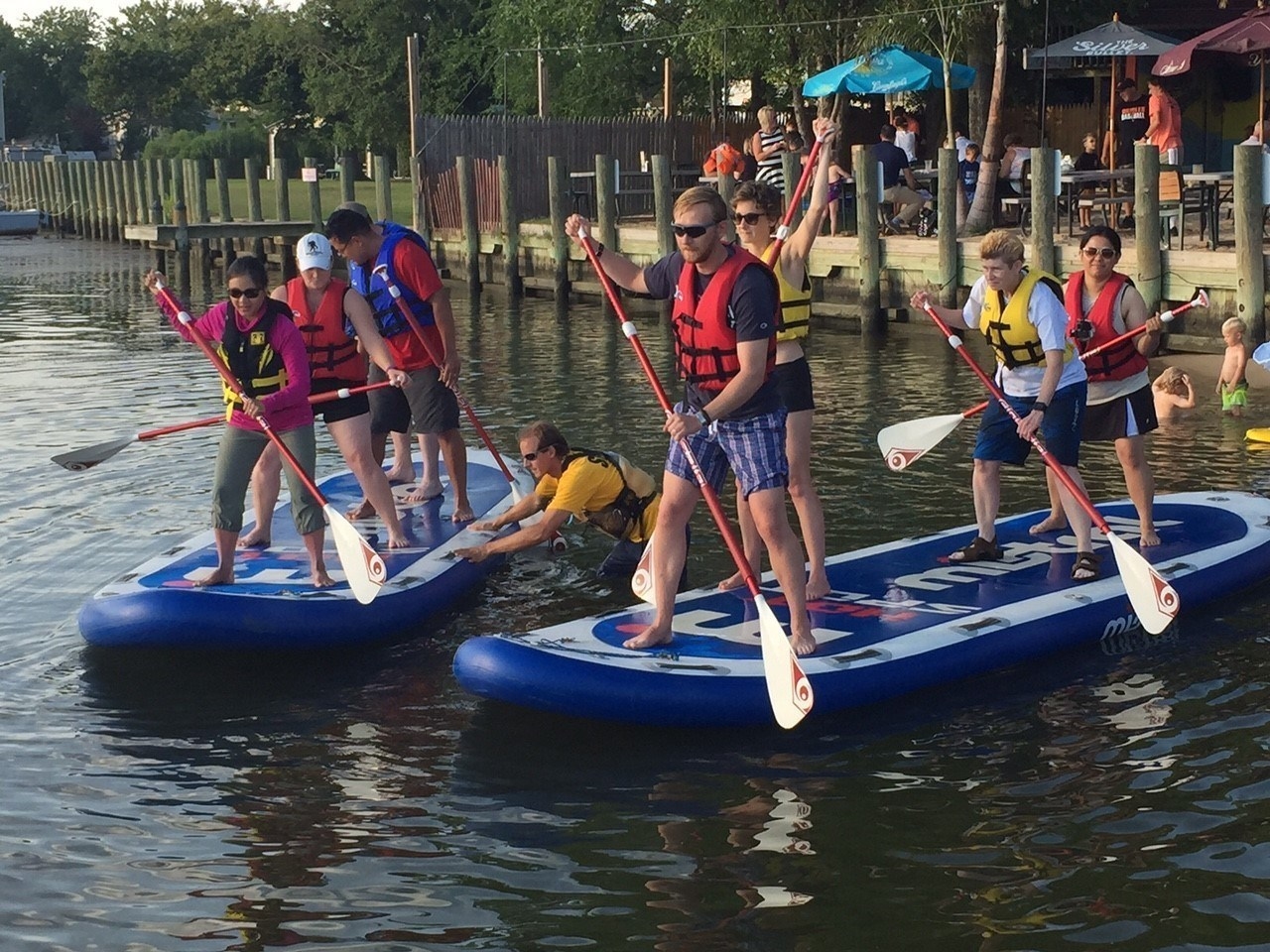
During a recent Wounded Warrior Project® (WWP) program gathering, wounded warriors and their guests had the opportunity to try something new – monster stand-up paddleboarding (SUP). These supersized boards are 18 feet long and inflatable, and can accommodate three to six people.
The fun day on the water allowed injured veterans to get to know each other in a relaxed setting, while being physically active. “Just having something to look forward to and getting out of the house helps me in so many ways,” said Army veteran Rich Davis. “It was an awesome experience to see people I already know and meet other veterans. It’s usually hard for me to talk to new people, but everyone there was so cool and just wanted to have fun.”
Every WWP program incorporates a social element to help combat isolation, which is one of the most significant struggles wounded warriors deal with after serving their country. It can be difficult knowing how to overcome that challenge and rekindle bonds similar to those formed in the military.
Only a couple participants had ever tried traditional paddleboarding, but no one flipped their board or fell off. These monster boards gave injured veterans the opportunity to bond and build relationships through teamwork. Warriors were divided into four groups for the monster SUP races. Each group worked together in an attempt to win the competition.
“I loved this experience with WWP, and taking first place made it even better,” Rich said. “Although it was new to me, I always enjoy activities involving the beach, river, or anything in or on the water.” After spending the day on the water, the warriors were treated to a signature Chesapeake Bay sunset while enjoying a delicious meal at picnic tables on the beach. This also gave them the opportunity to learn about various WWP programs and services from WWP staff. All WWP programs and services are offered free of charge for a lifetime, and are designed to ease the burdens of warriors, their caregivers, and families.
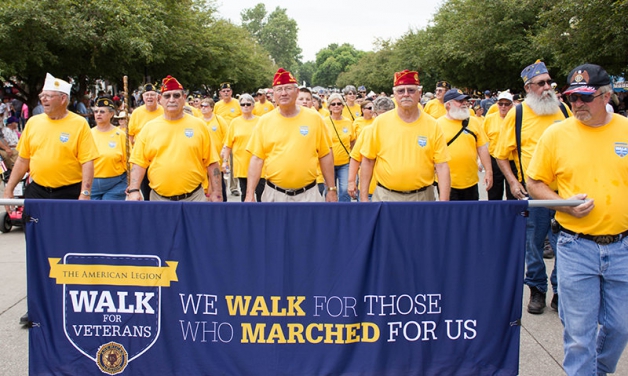
Over the past year, American Legion National Commander Dale Barnett has walked nearly 100 miles alongside more than 2,800 Legion family members in communities nationwide to raise awareness about issues facing veterans today and to tell the Legion’s story. The Awareness Walks for Veterans have taken Barnett and the Legion family across the campus of Marshall University in West Virginia, which inspired the 2006 movie “We Are Marshall;” over Edmund Pettus Bridge, which is part of the civil rights trail in Selma, Ala.; on the beaches in Virginia; on the Oregon Trail; and more.
On Monday, Barnett lead his 43rd and final Walk for Veterans as national commander alongside more than 340 Department of Iowa Legion family members in the Iowa State Fair Veterans Day Parade.
“As we began this journey of trying to implement awareness walks across the nation, I had no idea I would be walking today, probably in front of 100,000 people with over 300 of my Iowa American Legion family members hand in hand with me. That’s got to be a capstone of a great year as national commander,” Barnett said.
The Iowa State Fair Veterans Day Parade is a longstanding tradition of the fair where Legion family members, servicemembers and other veterans groups parade down the Grand Concourse on foot, aboard military floats or in vehicles in front of thousands of supportive spectators.
“As you walk through people thank you for your service; it makes you proud,” said Jim Peterson, immediate past Department of Iowa commander. “It’s amazing to see all the people out here on Veterans Day (at the fair) and for us to be able to get out the Legion message.”
During his time as department commander, Peterson energized Legion family members throughout the state about participating in the Awareness Walk for Veterans, held in conjunction with the the Iowa State Fair Veterans Day Parade.
“We had all this enthusiasm every place I went as a commander,” Peterson said. “I was telling everybody come to the fair, wear these (yellow Walk for Veterans) shirts, we are going to do an awareness walk with The American Legion family.”
The enthusiasm carried over into Monday’s walk – it marked the first time the Iowa Legion family congregated together as a large group to walk in the parade instead of being separated by posts. The impact the group – highly visible in their bright yellow Walk for Veterans t-shirts – had on parade viewers was loudly heard. “The large group of Legion family members marching together created the biggest response I’ve ever seen of applause and cheer from the crowd in all my years of participating in this parade,” said John Derner, Department of Iowa adjutant.
While some Legionnaires marched with their color guard or respective post, a selling point for the Iowa Legion family members wanting to walk in a group was the presence of Barnett. He is the first national commander to ever participate in the Iowa State Fair Veterans Day Parade with the Department of Iowa.
“Bringing the national commander in for this has created a huge response. The Iowa veterans really appreciate everything he has done all year,” said Kathy Nees, Department of Iowa programs director.
Barnett felt the support and enthusiasm from the veterans and the crowd.
“The energy was fantastic here at the Iowa State Fair; the crowd was so veteran-friendly today,” Barnett said. “As we marched on we heard many of them thanking us for our service. It was just a joy to be here amidst people who really appreciate our veterans and appreciate what The American Legion does in their communities.”
When word reached Richland Post 504 member Tony Bond that the national commander was coming to his town, he decided to participate in the Veterans Day Parade for the first time and asked his family of four generations to join him.
“He asked us to walk, and we wanted to support him and all the veterans,” said Angela Bond, Tony’s daughter-in-law.
Other prominent Iowa Legionnaires leading the walk with Barnett included Department of Iowa Commander Ken Rochholz, National Executive Committeeman Bruce Feuerbach, National Marketing Commission Chairman Ken Danilson and Past National Commander Dave Rehbein.
Rehbein reiterated that the walk as a group was a “really good opportunity to showcase who we are; this is part of marketing ourselves. And having the national commander here draws more visibility.”
Following the parade, Barnett greeted fair attendees at the Department of Iowa’s booth located on the Grand Concourse, watched performances by the Iowa Military Veterans’ Band and the 34th Army Band, and visited the “Remembering Our Fallen” memorial that pays tribute to Iowa’s military servicemembers who have died since 9-11.
Barnett is appreciative of the large turnout of Iowa Legion family members who chose to support his Awareness Walks for Veterans initiative, which gets Legion members out of their post home and into their community to share who the Legion is and what it does for veterans.
“When people see The American Legion it tells people that we are still out here, we’re still doing what’s right for America, doing things to help veterans, to help our communities, to support the youth,” Barnett said.
“I want to thank every Legion family member who participated in the walk and being proud of their service as a veteran or family member of a veteran. We need to understand that our freedoms are so precious, and we need to be a visible reminder to our community to do what we can to show forth the very best America has to offer. And that’s what the walks have done. I couldn’t be happier with the final results of the walks.”
By Cameran Richardson

Today's veterans can face any number of obstacles while furthering their education. Taking advantage of all the benefits they've earned and DESERVE shouldn't be one of them. That's why the VFW, in conjunction with the Student Veterans of America (SVA), developed the 1 Student Veteran program. 1 Student Veteran offers direct assistance to student veterans who have questions or are experiencing problems accessing their VA benefits.
The VFW seeks to ensure student veterans receive their benefits in a timely manner and have a place to turn to if they need help. Our direct access to VA Regional Offices across the country means that we can work quickly to provide our student veterans with timely and accurate answers regarding the complex claims process. Furthermore, our direct access to education claims adjudicators means that those whose education benefits have been wrongfully denied, delayed during a transfer from one school to another or paid in error, will not have to wait the months it would traditionally take to file a formal appeal.
Veterans who send a message to 1 Student Veteran will receive a reply from a VFW staff member who specializes in student veteran issues within 24 hours or the next business day.
If you have already confirmed your benefit eligibility through the VA's GI Bill Hotline, 888-GI BILL 1 (888-442-4551), and double-checked your enrollment verification with your school, take the next step and contact 1 Student Veteran today.
No one knows education benefits better than the VFW. After all, we played a major role in the passage of the 1944 GI Bill of Rights, the Montgomery GI Bill Act of 1984 and the recent Post-9/11 GI Bill.
Again, today's student veterans have enough to worry about. The peace of mind that 1 Student Veteran can immediately work to provide is just another way we're able to thank our veterans for all they've sacrificed for our freedom.
CONTACT US NOW FOR ASSISTANCE!

The Department of Veterans Affairs is committed to adding and retaining Veterans to our workforce. Whether you are a vet interested at working at VA or you're a Vet that already works here – VA for Vets will have something for you to find and advance your dream career.
>> Visit Site
Launch your career at the Nation’s largest health care system. Whether you are a Veteran or a civilian, work with a team of committed professionals dedicated to helping our Nation’s Veterans. Take the first step and join VA, today.
>> Visit Site
The Department of Veterans Affairs (VA) brings to you MyCareer@VA - a powerful career exploration and development resource you can use to manage your career.
>> Visit Site
Feds Hire Vets is a single site for federal employment information for Veterans, transitioning service members, their families, and federal hiring officials.
>> Visit Site
QUINCY, Ill. (AP) --
State officials have confirmed a third new case of Legionnaires' disease at a western Illinois veterans' home since an outbreak there last year killed 12 people and sickened 54.
The directors of the Illinois departments of veterans' affairs and public health said in a statement Thursday that three residents have tested positive for the disease at the Illinois Veterans Home in Quincy, Illinois, including two who state officials announced were sickened last month.
Of two dozen veterans who have been tested since the reports of new cases in July, 21 have come back negative, Illinois Department of Public Health Director Dr. Nirav D. Shah and Illinois Department of Veterans Affairs Director Erica Jeffries said. The Quincy facility houses about 400 residents.
The new cases come less than a month after a nearly $5 million water treatment plant and delivery system was unveiled at the Illinois Veterans Home. The bacteria that cause Legionnaires' disease grow in warm water and are often present in water supplies. The disease is spread when a person inhales water mist, not via person-to-person contact.
Shah and Jeffries said the state was implementing recommendations from the Centers for Disease Control and Prevention to reduce Legionnaires' disease risks at the facility.
"While these steps have made an impact, we look forward to the CDC's insight and advice on other scientific measures we can implement to further reduce the risk of infection," Shah and Jeffries said.
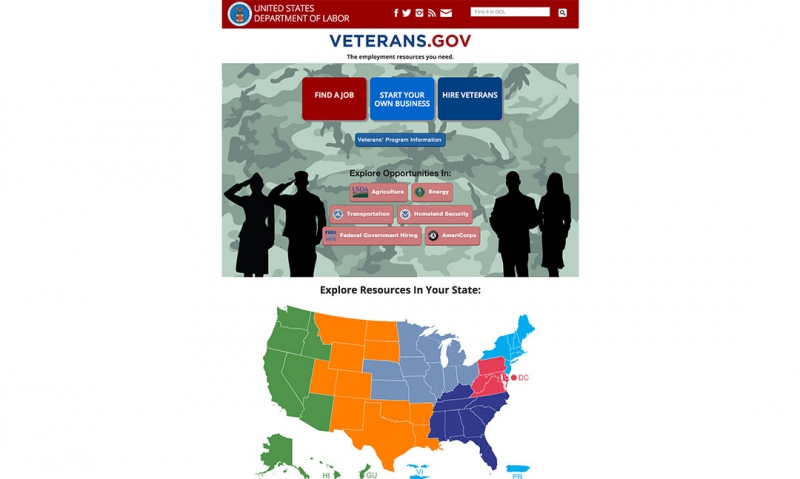
The Department of Labor recently launched Veterans.gov, a one-stop shop career hub intended to connect transitioning servicemembers and veteran job seekers with employers.
The site’s main page provides visitors several pathways to explore information on the site for job seekers, aspiring entrepreneurs and prospective employers. The site also features an interactive map, allowing users to search by state and territory, along with available career opportunities listed by federal agencies in industries such as agriculture, energy and transportation.
Other features of the website include:
• One-on-one assistance from approximately 2,500 American job centers located around the country
• Online job postings
• Information regarding approved local training programs, colleges and universities
The site also provides a link to additional information on other DoL Veterans Employment and Training Service initiatives for women veterans and spouses of military members and veterans.
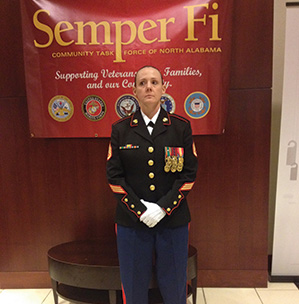
Robin Lore Lee from Huntsville, Ala., was a Staff Sergeant in the Marine Corps for 17 years. Five combat deployments took her to Afghanistan, Iraq, Egypt, United Arab Emirates and more.
“My grandfather, Robert E. Lee, was a drill instructor at Paris Island,” said Lee. “He inspired me to serve my country.”
But war has taken its toll on Lee’s health.
“I have cancer, severe PTSD, migraines, torn ligaments in my shoulder and lower back and a degenerative disc in my spine,” said Lee.
Lee was Temporarily Retired from the Corps and received a 100% rating from the VA, but her inability to hold a job and a delay in benefits sent her into a financial tailspin.
“The transition from full-time to veteran was very tough. I needed some help,” said Lee.
That’s when Lee heard about VFW Unmet Needs from her local VFW Post. She applied and was awarded over $1,200 in financial assistance.
“The grant paid my utilities, car insurance and phone bill,” said Lee. “It’s been a huge relief.”
Lee is so grateful to the VFW and its supporters for the hand up.
“Thank you to everyone who helped me when I thought my world was coming to an end,” said Lee. “It’s nice to know there are people out there willing to help veterans.”
The VFW Unmet Needs program provides financial assistance to veterans, service members and their families who experience financial hardship due to their military service. Learn more about the program, or apply today.