Museum Guide News
Museum Guide News
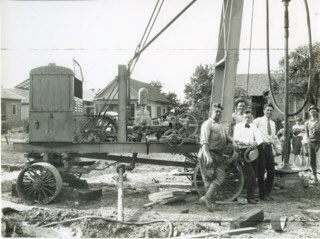
The Permian Basin Petroleum Museum, is a fascinating institution dedicated to preserving the history and educating visitors about the petroleum industry in the Permian Basin region.
A visit to the Museum is an amazing journey through over 230 million years of history. Located in the heart of the Permian Basin, the Petroleum Museum offers interactive education and entertainment for adventurers of all ages. It showcases exhibits on the geology of the area, the technology used in oil exploration and extraction, the impact of the industry on the local economy and culture, and the individuals who have shaped its history.
Visitors can explore interactive displays, multimedia presentations, and artifacts that highlight the development of the oil industry in the Permian Basin, which has been a significant contributor to the energy sector in the United States for over a century.
From the early wildcatters to the modern innovations in drilling techniques, the museum provides an exciting and comprehensive look at the evolution of the industry and its influence on the region and beyond.
In addition to its permanent exhibits, the museum often hosts special events, educational programs, and temporary exhibitions that go deeper into various aspects of petroleum exploration, production, and its impact on society and the environment. We are also proud to be a Blue Star Museum!
The Museum is a must-visit destination for anyone interested in the history of the oil industry or seeking to understand the role of energy in shaping the modern world.
Please go to our website to see all our upcoming summer exhibits and more! https://petroleummuseum.org/


USS Midway Museum: An American Treasure in San Diego, CA
Get ready for a one-of-a-kind adventure on America’s Living Symbol of Freedom. The USS Midway Museum on San Diego Bay, is the world’s most popular and visited naval ship museum. Dedicated to providing engaging and educational experiences, a visit to Midway not only lets guests enjoy more than 80 years of naval aviation history, but discover what it’s like to be a pilot.
Together, families will experience firsthand the legacy of this amazing aircraft carrier museum through Midway’s extensive collection of restored military aircraft. The museum’s flight simulators and virtual reality experience put visitors in the pilot seat, while guests will be captivated by the ship’s award-winning audio tour. Midway’s world-famous volunteers will bring the flight deck to life with gripping stories of launching and landing naval aircraft, as well as tales of high-seas adventure.
The Battle of Midway Theater will transport guests back to 1942 through the eyes and voices of American heroes to relive how the Navy turned the tide to victory in the Pacific during World War II. Kids can also earn their Junior Pilot Wings and become naval aviators through fun onboard activities.
The museum is rich with artifacts that tell the story of the U.S. Navy, and naval aviation in particular. Displays and exhibits have been developed with these artifacts to provide guests with a better understanding of the role Midway played during its 47-year career in not only protecting American democracy and freedom around the world, but also how the ship supported important humanitarian operations overseas.
Midway is a treasured San Diego icon, and visitors to the museum will experience the significant contributions made to the nation by America’s naval service. Midway is a family-fun adventure. We looking forward to welcoming you! For more informtion: https://www.midway.org/

Here in Lubbock, we have two amazing museums that showcase aspects of the City’s unique history: the Buddy Holly Center and the Silent Wings Museum.
The Buddy Holly Center preserves and promotes the legacy of Buddy Holly and the music of West Texas, as well as provides exhibitions on contemporary visual arts and music for the purpose of educating and entertaining the public. Exhibitions, tours, concerts, classes and gallery talks are designed to cultivate an atmosphere where art and music are celebrated. The Buddy Holly Gallery features a permanent exhibit on the life and music of the Lubbock native and West Texas icon. Artifacts include Buddy’s Fender Stratocaster guitar and his famed horn-rimmed glasses, along with items from his youth and career.
The Silent Wings Museum is located six miles north of the Buddy Holly Center and is adjacent to the Preston Smith International Airport. It is the only museum in the world dedicated solely to preserving the history of the WWII military glider program. The museum is home to one of the few accurately and completely restored CG-4A gliders left in the world. The exhibits focus on the airborne operations in which gliders were used, the training of the glider pilots and the technical history of the gliders themselves.
The Buddy Holly Center and the Silent Wings Museum are open Tuesdays through Saturdays from 10am to 5pm, and on Sundays from 1pm to 5pm. Visitors are welcome to check out our websites for the most up-to-date information on admission prices, special events and holiday hours.
https://ci.lubbock.tx.us/departments/buddy-holly-center 806-775-3560 https://ci.lubbock.tx.us/departments/silent-wings-museum 806-775-3049
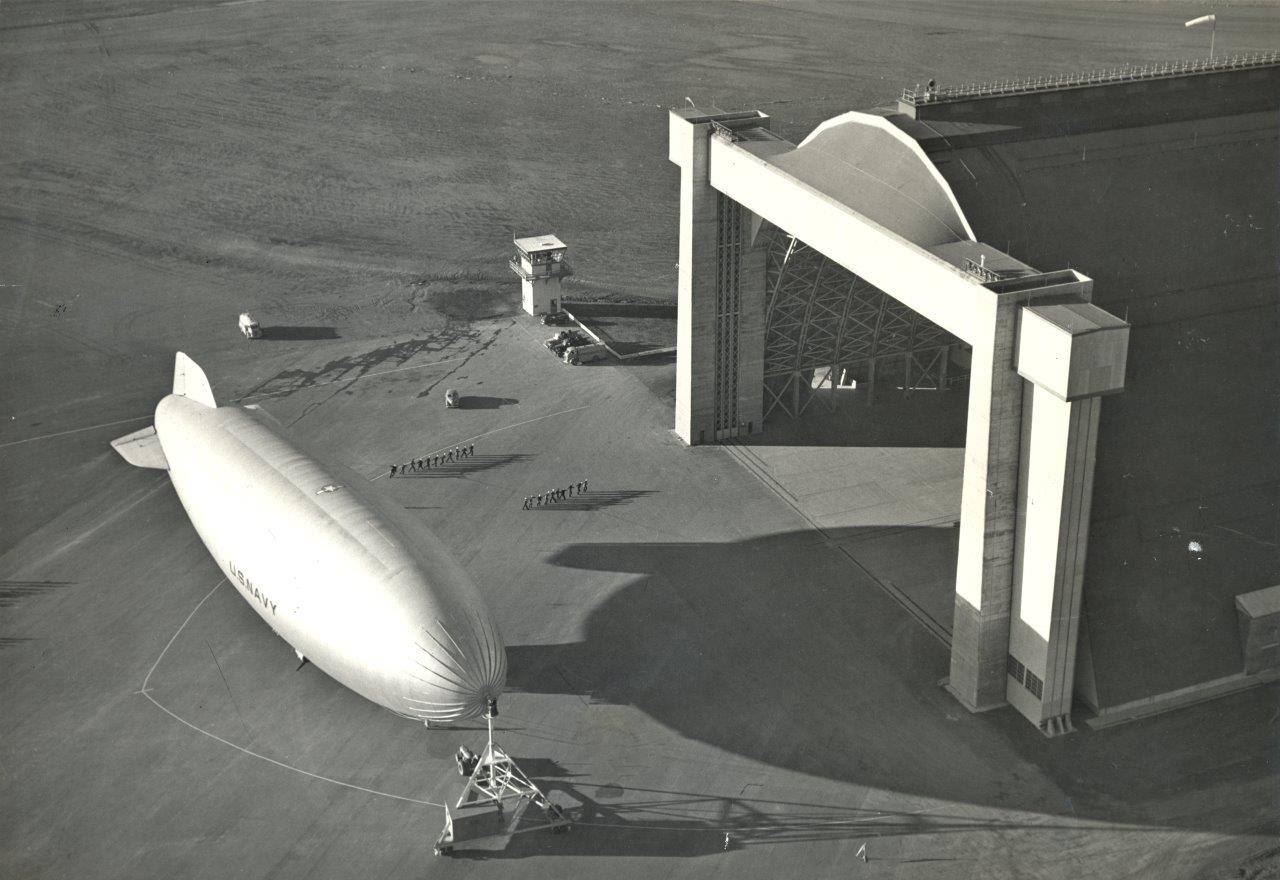
The Tillamook Air Museum: History Housing History
Hangar B, the Tillamook Air Museum’s home, was built as part of an ambitious plan to protect the West Coast during WWII. Naval Air Station Tillamook constructed two massive wooden hangars, each using enough lumber to build 279 three-bedroom homes! Construction of Hangar B began in November 1942 and was completed in just nine months.
In 1989, Hangar B was placed on the National Register of Historic Places, securing its legacy as a national treasure. Five years later, it became home to the Tillamook Air Museum, dedicated to preserving aviation and wartime history.
Our collection features legendary aircraft with remarkable service records. The F-14 Tomcat, famously featured in Top Gun, represents the cutting edge of naval aviation. Our F-4 Phantom cockpit, used in the film Sully, offers a glimpse into Cold War airpower. The battle-proven A-7 Corsair II flew 39 missions in the Gulf War, while our B-52 cockpit took part in 14 Gulf War missions and countless operations during Vietnam. And there’s more to discover!
Beyond the aircraft, our Exhibit Hall showcases rare wartime and aviation artifacts, including pieces from Nazi Germany, Imperial Japan, relics dating back to WWI, and items from the September 11th attacks, an important chapter in modern history.
This museum offers a truly unique experience that’s both educational and entertaining for all ages. Whether you’re a history enthusiast or looking for a fun family outing, the Tillamook Air Museum brings history to life in a way that’s both exciting and entertaining. Perfect for kids, parents, and history buffs alike, it’s a one-of-a-kind experience you won’t want to miss! https://www.tillamookair.com/
Unfortunately, presently we are closed due to exstensive storm damage. We hope to be re-open again sometime in late 2027! We'll see you then!
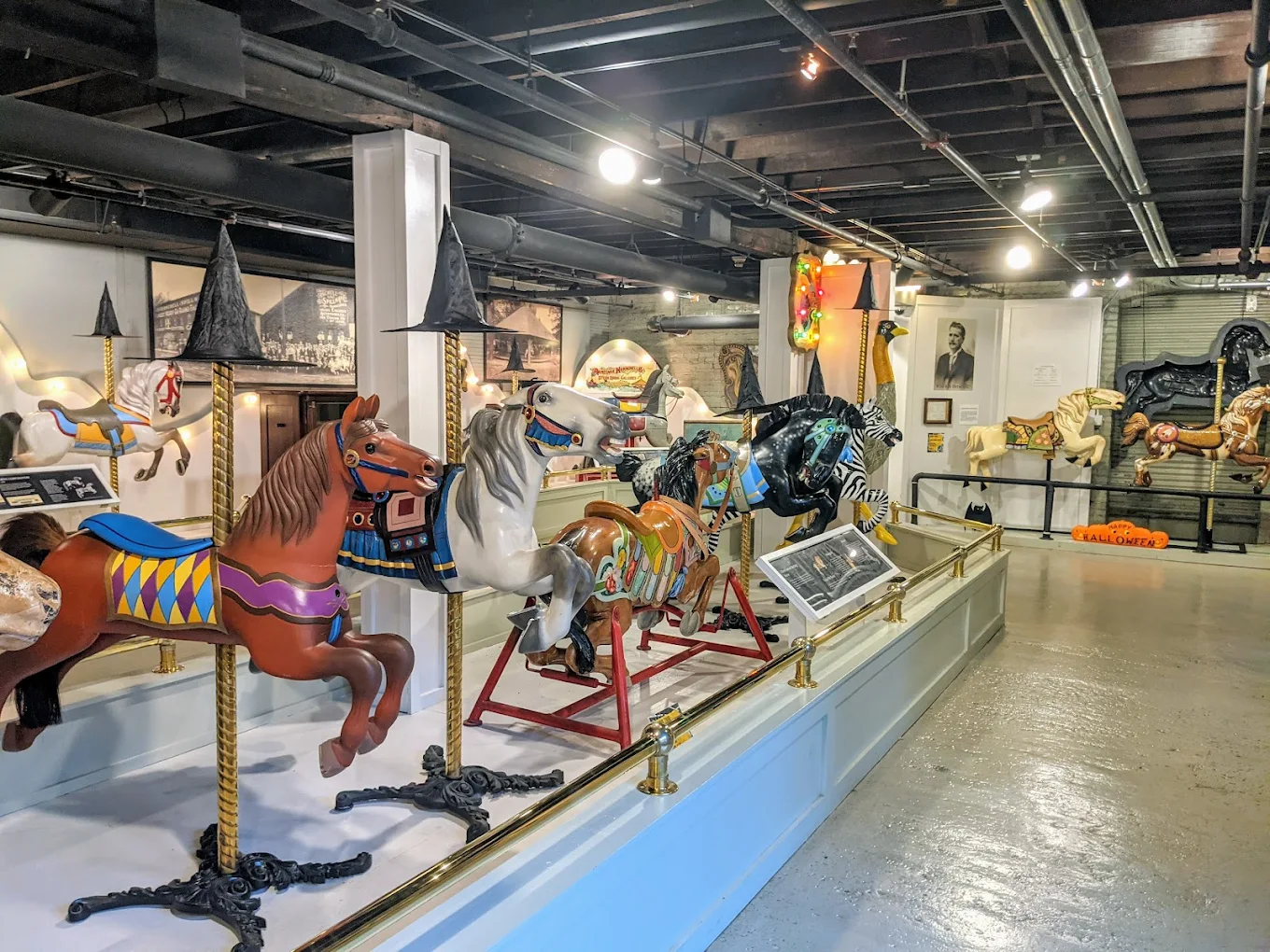
The Herschell Carrousel Factory Museum, in North Tonawanda, NY is one of a kind!
Operated by the Carousel Society of the Niagara Frontier, is a premier national historic site and community resource for family recreation. Through educational, cultural, and recreational programming, visitors will experience the places, people, stories, and artifacts associated with the production of carousels, band organs, and amusement devices.
The Allan Herschell Company, founded in North Tonawanda, New York, was the fourth in a series of companies in the community which manufactured carousels and other amusement park rides. It was Allan Herschell who first came up with the idea of a carrousel museum!
It’s been over 46 years since the concept of a carrousel museum in North Tonawanda was initiated. 10 people sat around a table in the Carnegie Art Center to discuss the possibility of bringing a carrousel back to North Tonawanda, a city in which more hand carved carrousels were produced than the total of all other US cities that created them.
One of the special exhibits, is the carving floor of the Allan Herschell Company. It's where carousel animals originally began to take shape. Carvers worked from large line drawings of animals. First, the sketch was traced onto basswood or poplar. After the carvers finished the details, the parts were then glued together and smoothed before the animal was moved to the paint shop in the next room. In later years, the Allan Herschell Company began to make animals using cast aluminum.
Another wonderful exhibit is the “The Jeanette E. Jones Children's Gallery”. This room was originally the machine shop for the Allan Herschell Company where workers produced the metal parts for carousels and other amusement rides. It is now our children’s space in the museum. Today, the Children’s Gallery holds our Kiddie Carrousel and many interactive activities for families to enjoy when visiting the museum. The space is a festive place to hold a birthday party or baby shower. Check our rentals page for more information!
The Museum is perfect for all ages and bring the carrousel beginning and history back to life! Come visit this summer – for more information see us online: https://www.carrouselmuseum.org/ 716-693-1885

The Museum at Warm Springs, in Warm Springs OR. is many things, not the least of which is a striking piece of architecture, a 25,000 square-foot structure that packs an emotional wallop all too seldom felt in contemporary public buildings!
But most of all, perhaps, The Museum exists as an answer to a question that has troubled Native Americans in general, and The Confederated Tribes of Warm Springs in particular for most of the past century. Can this nation’s Indigenous peoples take any meaningful steps on their own initiative, under their own control to halt the erosion of their traditions, the dispersal of their sacred artifacts, the loss of their very identity as a culture?
Chief Delvis Heath of the Warm Springs Tribe is a quiet man with a deeply lined face. “Way back in the 1960s,” the Chief laments, “We could see that the old ways were disappearing, the old language was disappearing, and pretty soon none of our young people would know where they came from or who they were. That’s when we decided to build a museum.” This was truly, a dream come true!
The Museum at Warm Springs exists to preserve the culture, history and traditions of the three Tribes which comprise The Confederated Tribes of Warm Springs. The Museum was designed to provide a welcoming sight to the public as well as a safe conservatory for the traditional treasures of the Tribes.
The Museum contains the Permanent Exhibit, a changing exhibit gallery, an exquisite gift shop, public restrooms, a library/archive, education room with cooking facilities, a conference/board room, artifact collection space and an office, a maintenance room and an administrative area. Just outside to the west, a small amphitheater is designed to be used for outdoor performances, demonstrations, and other public events.
These galleries showcase tribal artifacts, but The Museum devotes as much to the cultural and historical record of The Confederated Tribes of Warm Springs Reservation as it does to their arts and crafts. “We wanted the museum to tell the story of our people,” explains Delbert Frank, Sr., President of The Museum’s Board of Directors in 1993 and an influential member of the Tribal Council. “We wanted it to tell the truth. To educate both the public and our own children. To tell them who we are.”
We look forward to welcoming you this year - https://museum.warmsprings-nsn.gov/

Crazy Horse Memorial and Military Veterans
Since the first blast on the mountain on June 3, 1948 there has been a relationship between the Crazy Horse Memorial and military veterans and especially Native American veterans. First you would have to look at the personal history of one of the founders of the Memorial, Korczak Ziolkowski, a noted sculptor who worked on Mt Rushmore in 1939 and won first place at the Worlds Fair in 1939 for his sculpture of Paderewski. He volunteered at the age of 34 for the Army in 1943 and three days after D-Day landed on Omaha Beach Normandy where he was wounded. The military experience and sacrifices of so many had a profound effect on Korczak and to this day admission to the Memorial is waived for active duty military, Native Americans, Boy Scouts in uniform and local county residents.
In 2000 Ruth Ziolkowski approved a new program to allow veterans of the local VA hospital in Hot Springs, SD to work at the Crazy Horse Memorial and Korczak’s Heritage through a compensatory work therapy program. It is a beneficial program for both the veterans and the Crazy Horse Memorial and Korczak’s Heritage and numerous veterans have participated in the program to present date.
Another program that started in the local Custer, SD area occurred in 2011 with the new non-profit Operation Black Hills Cabin to say thank you to any 30% minimum Combat Injured veteran from any post-9/11 military operation and his immediate family for a one-week respite in a cabin in Custer free of charge. Crazy Horse Memorial and Korczak’s Heritage have offered waived admission, a meal at the Laughing Water Restaurant, and a bus to base tour to the average 17 families each summer. Since 2011 178 families from 37 states have been guests of the Operation Black Hills Cabin. Since 2015 Terry DeRouchey, also a military veteran, has collected van ride tickets donated by Storytellers each year to be able to take the veteran and his immediate family for a trip of a lifetime to the top of the mountain carving. Thanks to the generosity of Storytellers he has been able to take all combat injured veterans and their families as part of the Operation Black Hills Cabin to the top.
Thanks to efforts of Visitor Services staff, groups from Wounded Warriors and Sheepdog Impact organizations had the opportunity to take a trip of a lifetime to the top of the mountain carving the last three years .
The tribute to the accomplishments and sacrifices of Native American veterans came about in 2019 when a different Native American veteran was honored each week at Crazy Horse Memorial and where all veterans are recognized. American Indians per capita have had the highest percentage of their people in military service exceeding every American ethnic group. Make sure to visit us online too: https://crazyhorsememorial.org/
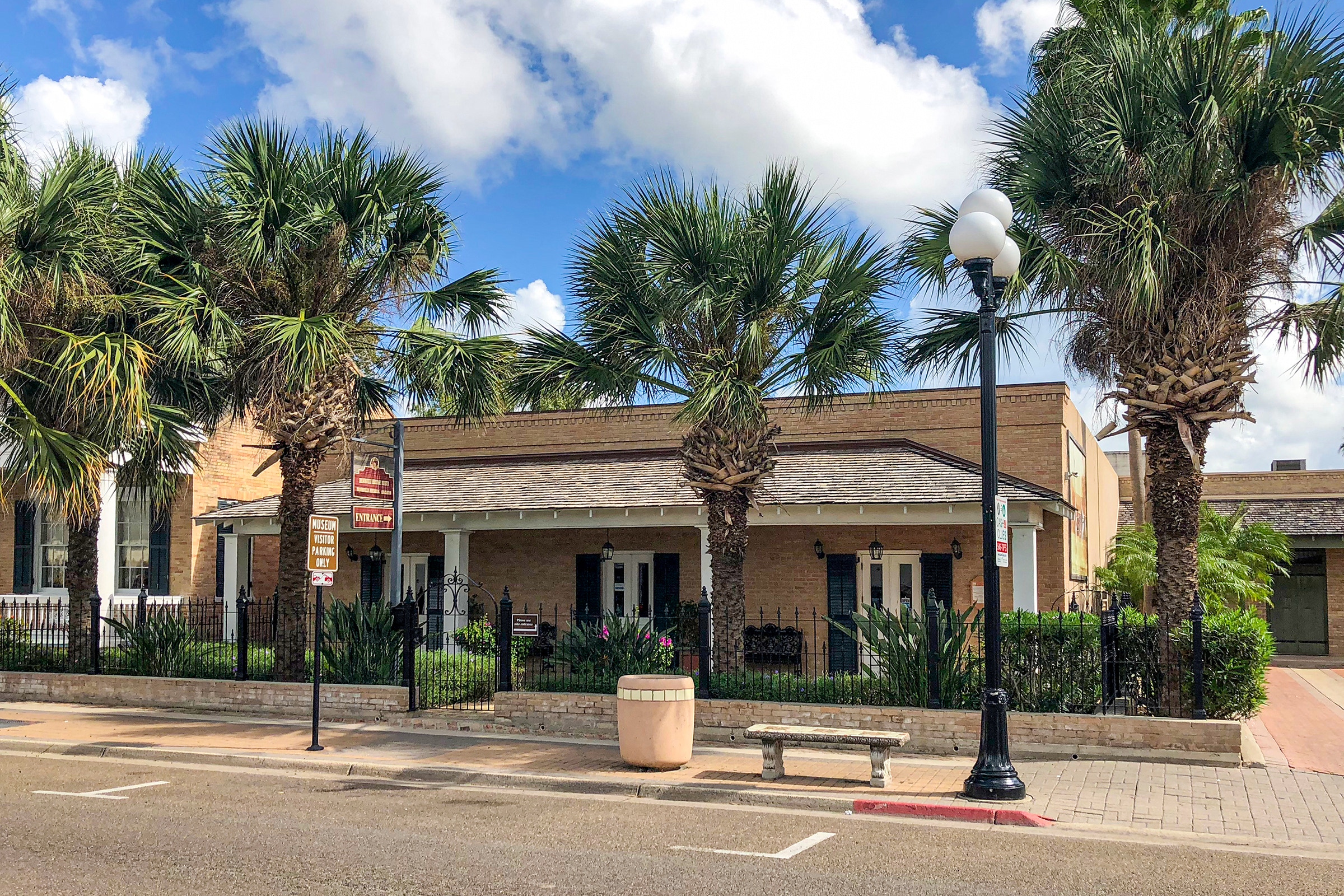
Since 1947, the Brownsville Historical Association has served the local community and created opportunities for every resident to learn about, participate with, and come to an appreciation of the connection between our history and cultural art.
We serve the community through our various museums (featured below) that cover nearly every aspect of Brownsville and the Rio Grande Valley’s history and culture. The vision of BHA is to improve the quality of life for all residents of Brownsville, Texas, and its environs by providing life-long learning experiences about the history, cultural arts, and heritage of the region, and to continue to attract tourism to the heart of Historic Downtown Brownsville. The Brownsville Historical Association serves the community through eight unique locations and numerous programs throughout the year.
BHA, features four museums: The Brownsville Heritage Museum portrays visual images of the historical evolution of the city and surrounding regions from discovery and exploration up to the first half of the 20th Century. The photographs, maps, costumes, and artifacts provide a unique perspective on various aspects of Brownsville life, ranging from street scenes and education to transportation and ranching. The Brownsville Heritage Museum hosts numerous presentations, musical performances, and book signings throughout the year.
The Stillman House Museum is among the oldest surviving structures in Brownsville. The house seen today is the result of additions made by the Trevino family during their time in the house. The original windows, shutters, and doors are still in place and the breezy courtyards enjoyed by the Stillman and Trevino families still offer a respite from the hot Texas sun.
The Historic Brownsville Museum is located at the old Southern Pacific Railroad Depot. Built-in 1928, the Southern Pacific Railroad Depot is recognized as a Texas Historical Landmark and is listed on the National Register of Historic Places. Inside the depot, the museum details the events that led to Brownsville's establishment and display temporary exhibits that highlight various topics related to local history.
The Laureles Ranch House Museum once belonged to the founder of Brownsville, Charles Stillman. Now in its new home, located in Linear Park, the fully restored home offers a rustic setting for parties and special events. Largely used for the outside porch space and the grounds outside the home, this house setting is a unique venue.
Lastly, The Costumes of America Museum is the world of Josefa Ibarra, a woman whose vibrant spirit and fierce dedication to artistry reshaped the landscape of Mexican fashion. Josefa Ibarra, often hailed as "the mother of Mexican fashion design," was born on April 12, 1919. Known for her innovative and avant-garde approach to clothing design, Josefa’s work is characterized by a kaleidoscope of bold colors, unconventional silhouettes, and a fearless embrace of new materials and textures for decades. Today, Ibarra's unique vision has earned her a reputation as a trailblazer in the fashion industry.
We look forward to welcoming you at our Brownsville Museums, please see our website for our museums hours and our online gift shop and to plan a visit: https://www.brownsvillehistory.org/

A must visit if traveling to Muskegon, MI is the USS Silversides Submarine Museum! Where men and women of the military are honored, and where their history and experiences are preserved! The museum also provides experiences that educate the public about past and present military history and technology.
The USS Silversides Submarine Museum was originally opened as the Great Lakes Naval Memorial and Museum, but its history is closely intertwined with that of our namesake, the USS Silversides submarine. The USS Silversides (SS-236) was commissioned on December 15, 1941, shortly after the attack on Pearl Harbor. She embarked on her first war patrol in April, 1942, and went on to complete 14 war patrols in the Pacific during WWII. She transited the Panama Canal in September, 1945 on her way to New York, and was decommissioned in April, 1946. She then became a stationary training ship in Chicago until 1969.
After retiring from service, she spent time in Chicago as a museum ship, moving to Navy Pier in 1979. In 1987, the USS Silversides was towed across Lake Michigan to become part of the Great Lakes Naval and Memorial Museum. Eventually a two-story museum building was added to the facility, now known as the USS Silversides Submarine Museum.
Today, the museum allows you to immerse yourself in WWII history, with a wide variety of permanent and temporary exhibits on display. While you’re here, you can climb aboard and down the hatch of the USS Silversides Gato-class submarine.
We look forward to seeing you soon and make sure find mor information about the museum on our website! https://silversidesmuseum.org/
Summer Hours: April 1st – October 31st - 7 Days a Week: 10am – 5:00pm.
Winter Hours: November 1st – March 31st Thursday – Monday: 10am – 4pm Tuesday & Wednesday: CLOSED
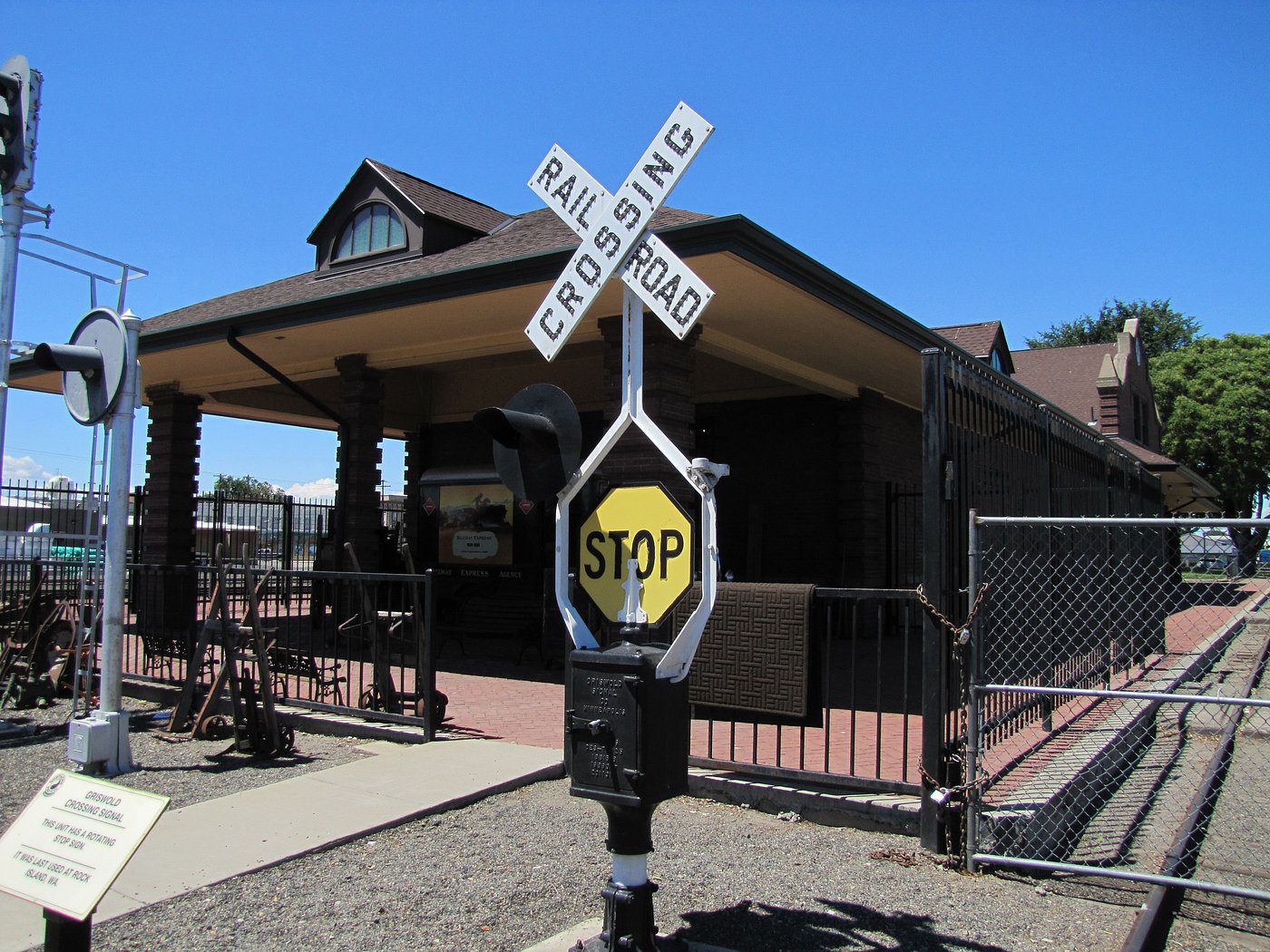
The Northern Pacific Railway Museum in Washington State was a 1911 train depot that was completley restored and refurbished after it was taken over in 1989!
The 1364 is moving on its own after 72 years since becoming a static display! Lots of happy tears when she made her way down the track on her own steam. https://share.google/UqC4oKQ10yYu8NQ30. This 4th of July she will blast her whistle and fill the area with red smoke to start off the local parade.
Back on July 4th, 1993, the museum had it’s grand opening and in 2000 the museum was officially renamed the Northern Pacific Railway Museum. From freight and telegraph rooms, to the waiting room to the bathrooms, the depot holds history dating back to 1911. Freight trains back then would deliver anyting from newspapers to the very first automobles! The museum consist different types of those cars! The museums also contains the many other types of commodities transported through the depot through the years!
Many of our artifacts come from our hard working volunteers. We also, have many trains cars from the past. This includes dining cars that are set just as they were in the early 1900’s. You can view the train car kitchens as well!
Also, this holiday come see our “Toy Train Christmas All Aboard” Toy Train Christmas is here. Join us for train rides to Santa, cocoa, cookies and a depot full of toy trains. 10 Asotin Avenue, in Toppenish 10am to 4pm Saturdays and Sundays November 29 through December 21. Here's how to find us: https://nprymuseum.org/find-us-2/
We look forward to welcoming you soon, so you can expeerience a bit of railway and train history from the past! https://nprymuseum.org/